






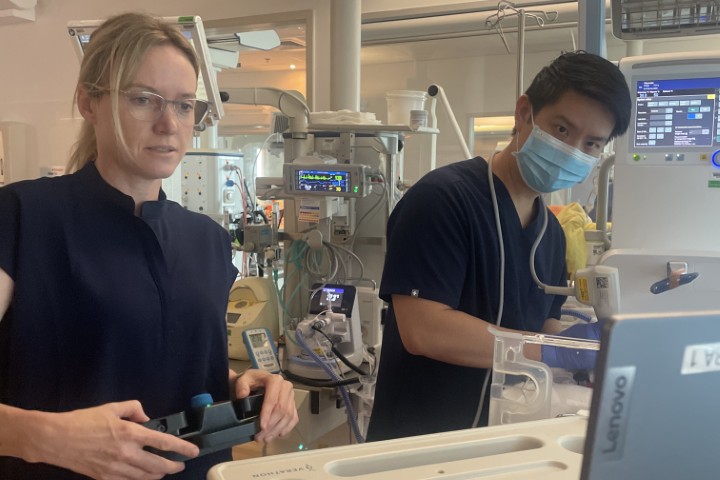
A national retinopathy of prematurity (ROP) screening programme and world-first ROP image-sharing repository is now up and running in Aotearoa to improve eye-health care for premature pēpi.
The first formal guidelines for ROP screening in New Zealand were established in 1990. All babies born in neonatal intensive care units (NICUs) before 30 weeks gestation, who weigh below 1.25kg, who have been sick, or are thought to be at higher risk of developing ROP are routinely screened.
The new national ROP programme – one of three focus areas for Health New Zealand’s Eye Health National Clinical Network – has seen the installation of 23 new widefield digital retinal imaging (WFDRI) cameras (eg. RetCam) across NICUs. This, paired with image-sharing software Harmony, simplifies reporting and comparison of images while allowing remote grading.
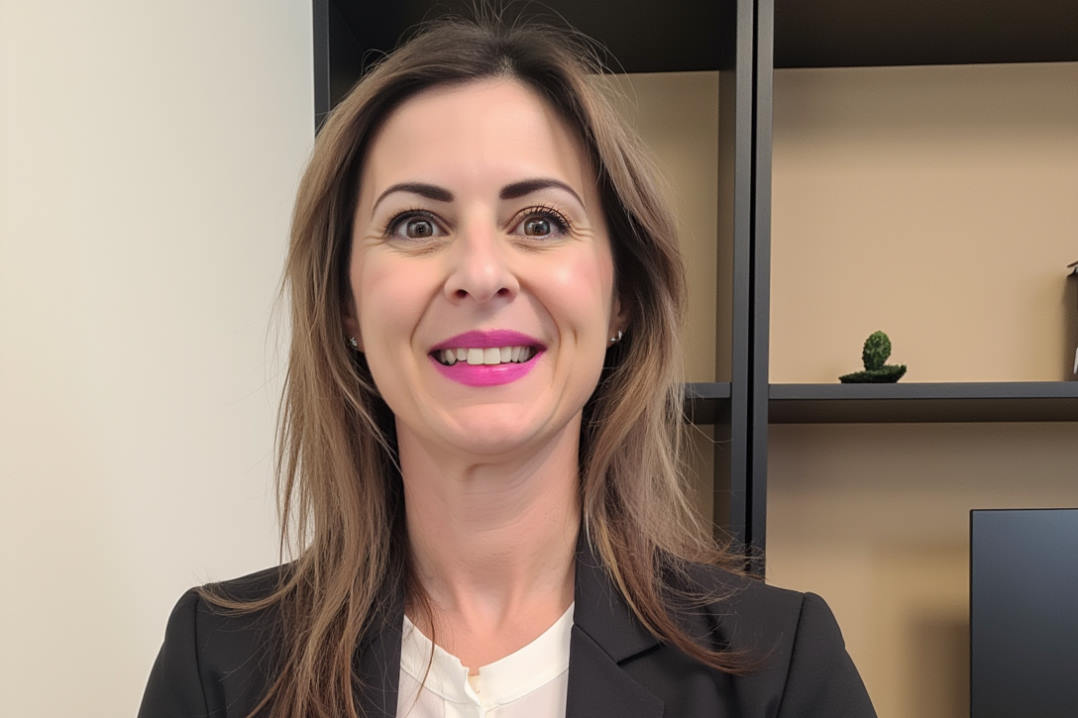
Sharing ROP screening imagery is a significant step forward, said Dr Sarah Welch, national co-lead of the Eye Health National Clinical Network. “While there are still some teething issues to be resolved to effectively integrate cameras and computers with Harmony, we can already see how beneficial this system is.
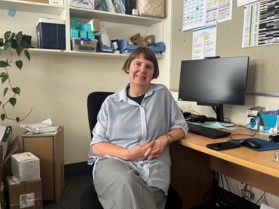
Dr Sarah Welch
“When a colleague reaches out to me for a second opinion, I can log in to Harmony and see the photos,” Dr Welch said. “Normally, we'd get an email and it would only be two or three images and, because they’ve been downloaded two or three times, the quality wasn’t very good. But now, when a colleague from Christchurch reached out to me, I could see the whole suite of original images and offer my opinion. It was a ‘wow’ moment. This is working seamlessly now and we are the only country in the world that has one [national] ROP image database.”
WFDRI for ROP screening and diagnosis has been shown to be as accurate as, or potentially better than, the traditional binocular indirect ophthalmoscope ROP screening, Dr Welch said. “In the Auckland region we have been using widefield cameras since about 2005 and I think they can give you more [detail] and offer a much better record. Part of what you're assessing is progression, so if you're just looking, then you can sort of grade it and draw it, but my drawings are terrible – like two squiggles! But if I've got a photo and I’m able to bring up older photos, we can see if they're the same or if there’s a change. All screeners having access to the same type of camera is also important for comparison, as going between cameras can sometimes lead to a slightly different result.”
ROP is the first cab off the rank for the Harmony programme, designed specifically for ophthalmology image storage and review, Dr Welch said, with ophthalmology departments across the country to follow by the end of this year. “Ultimately, in the long term, that’s how we see optometrists referring to us. When optometrists see something they’re not sure about, they can just upload it to Harmony and we can have a look.
“We’re still in the learning phase but it’s progressing really well and I think people are keen to take it up,” Dr Welch said. “RANZCO NZ in May will offer an opportunity to meet with clinicians and ask them how it’s going and what we can improve.”
The prevalence of childhood blindness in Aotearoa due to ROP has fallen. Data collected from Blind and Low Vision Education Network New Zealand in 2024 showed there was an 80% reduction in blindness from ROP (from 30 to six cases) compared with 2012 data.