





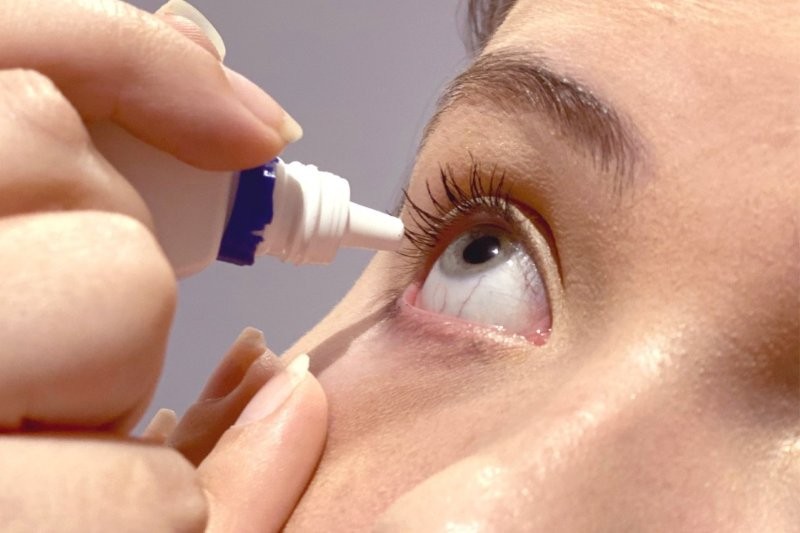
New research shows commercially available artificial tears differ significantly in their viscosity and shear-thinning behaviour, which researchers said may have implications for ocular surface lubrication and tear-film stability.
Published in Journal of Clinical Medicine, the study was led by researchers at the Medical University of Vienna. Investigators used a novel optical rheometer to measure the shear-stress-dependent viscosity of seven artificial tear formulations and compared them with natural tears under blink-relevant conditions.
Natural tears showed minimal change in viscosity across shear rates, reflecting non-Newtonian, shear-thinning behaviour crucial for tear-film stability and reduced friction during blinking. Among artificial tears, low-molecular-weight hyaluronic acid formulations such as Ivizia and Thealoz Duo had viscosity profiles closest to natural tears. Although medium- and high-molecular-weight products displayed steeper viscosity gradients, overall rheological behaviour could not be predicted solely by hyaluronic acid concentration or molecular weight, said authors.
“The varying degrees of shear-thinning behaviour we observed across formulations highlight that rheological properties depend on a complex interplay between hyaluronic acid and excipients,” said researchers.
Understanding rheological differences may inform selection of artificial tears for dry-eye disease and future clinical work is needed to link in-vitro profiles with symptom relief, tear-film stability and patient outcomes, they concluded.