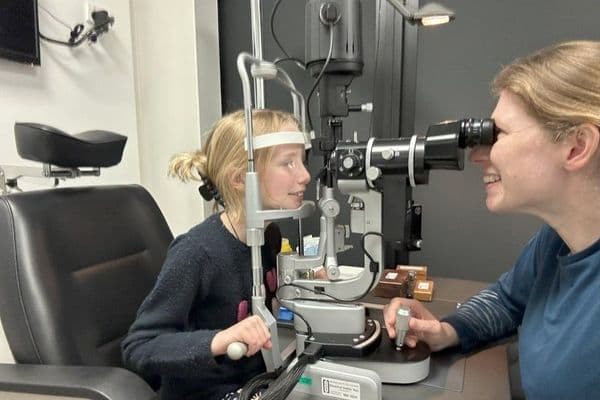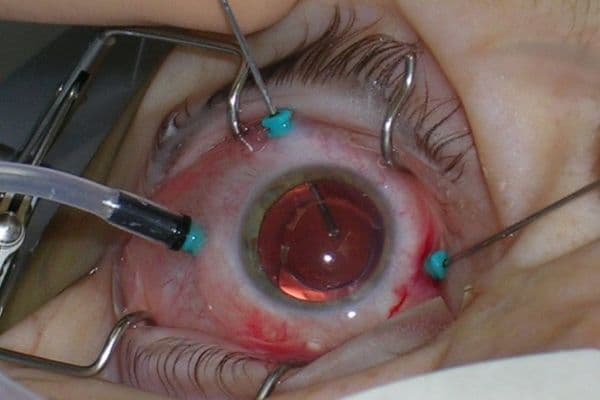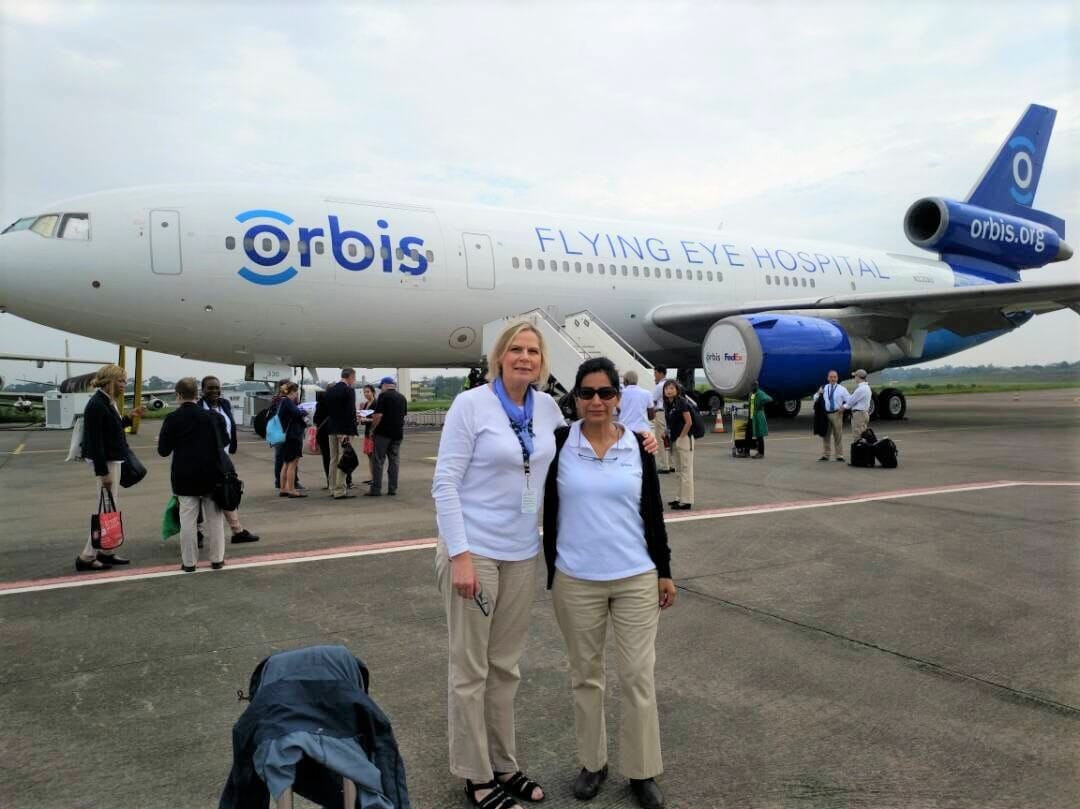
Orbis is the world’s only accredited teaching flying eye hospital. It was set up in 1982 by an American ophthalmologist called Dr David Paton who felt that if people were not able to travel to increase their knowledge, then the next best thing would be to travel to where the knowledge and skills are needed.
Over time, Orbis has evolved from upskilling ophthalmologists and nurses to providing hands on training for biomedical engineers, orthoptists and optometrists. It organises study symposiums with guest speakers and, with the advent of the internet, has also established Cybersight to enable information to be exchanged remotely, including triaging of patients for future programmes and timely advice for difficult cases.
A core group of staff including nurses, doctors, anaesthetists, administration staff, engineers and mechanics fly regularly with the new MD-10 plane, which replaced the aging DC-10 last year. People like me, and other visiting professionals also join the team for a week or two to share knowledge and skills with overseas colleagues.
For this trip, Orbis was again invited by Philémon Yang, the prime minister of Cameroon, to come for four weeks to strengthen the clinical and operational capacity of Orbis’ partner hospitals, Yaoundé Central Hospital and Magrabi ICO Cameroon Eye Institute. The government hospital is a large hospital with limited resources, while Magrabi is newly built with better resources, but with doctors who have limited surgical experience. Cameroon is home to 25 million people with about 73 ophthalmologists to treat the main causes of avoidable blindness namely cataract, glaucoma, onchocerciasis, trachoma with corneal scarring, and refractive error. Because of the number of people, the scarce resources and under qualified staff, screening and referral of eye disease and access to quality eye care remains a great challenge.
On the ground in Yaoundé (9 Oct - 3 Nov 2017)