The prevalence and severity of dry eye disease (DED) is known to increase with age1. However, several recent studies have reported a high prevalence in younger populations. Increased digital screen use, particularly during the Covid-19 pandemic, has been associated with symptomatic DED in 70.8% of university students; other associated risk factors were higher perceived stress scale scores, prolonged contact lens wear and female sex2.
Even prior to the pandemic, studies were reporting higher than expected DED prevalence in young adults. Data obtained from a large population-based cohort study in the Netherlands found a particularly high prevalence of dry eye symptoms in 20-30-year-olds3. They proposed an association with hand-held screen use among the younger adults in the cohort. A similar trend was found in a large paediatric population (7-12-year-olds), where smartphone use was strongly associated with DED, whereas outdoor activity was protective against its development4.
The prevalence rates of DED vary between studies, depending on the diagnostic clinical test, type of questionnaire, or cut-off values employed. In 2016, 44.3% of Ghanaian undergraduates reported symptomatic dry eye in a cross-sectional study5, while in 2018 a lower prevalence of clinically diagnosed DED (10%) was reported among 901 university students from Shanghai6. In a large cross-sectional study, 2140 Brazilian university students reported a higher prevalence of dry eye symptoms than the general 40-years-old-plus population7. In addition to well-established risk factors, sleeping less than six hours and use of a screen for more than six hours a day were found to be associated with DED. A higher prevalence of DED has also been reported in Asian than Caucasian populations1.
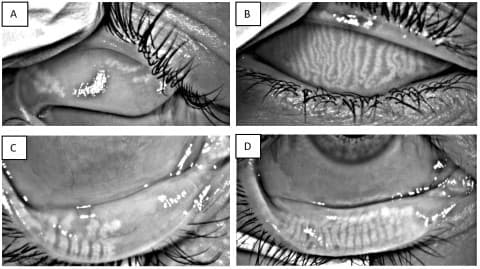
Meibomian gland dysfunction (MGD), a contributor to evaporative DED, is considered to be the leading cause of dry eye in clinic and population-based studies8. Use of digital devices has been linked to meibomian gland loss and reduced or incomplete blink rates9, which are known risk factors for evaporative DED10.
Aston’s young adult study