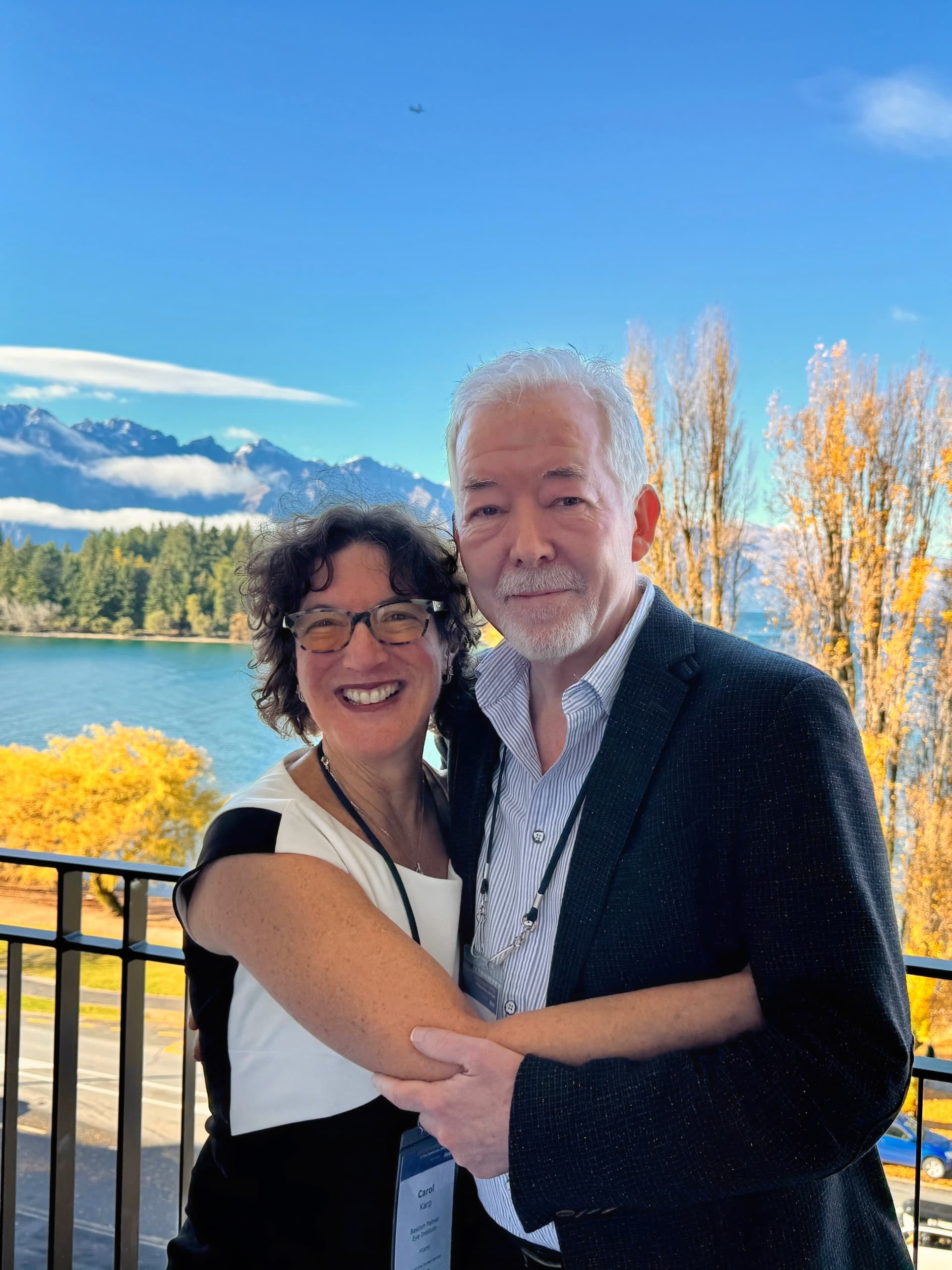
Bascom Palmer Eye Institute’s Professor Carol Karp delivered several of the meeting’s most elegant clinical lectures. Her talk on ‘the ABCs of anterior segment OCT’ for ocular surface pathology was immediately practical, particularly in recognising and monitoring ocular surface squamous neoplasia. Across her later talks on ocular surface masqueraders, cataract surgery in eyes with corneal and ocular surface lesions and in the Molteno Lecture, she presented a coherent diagnostic philosophy: look carefully, image intelligently and remain alert to diseases that do not behave as expected. Her framing of OCT as an “optical biopsy” was especially powerful.
Paediatric ophthalmology was brought vividly to life by the Netherlands’ Dr Jan-Tjeerd de Faber. His lecture on anterior segment surgery in congenital eye anomalies combined deep surgical experience with humour, warmth and evident affection for patients and families. His aphorism that “paediatric ophthalmology is 50% parentology” was cheeky yet precise. One of his four lectures, the fascinating ‘Gorillas out of the mist’, recounted his adventures as a visiting ophthalmologist at Rotterdam Zoo, including YAG capsulotomy in a mouse lemur, cataract surgery in gorillas, horses and codfish, plus a memorable pearl: never give atropine to birds!
Efficiency and sustainability in cataract surgery
The University of Sydney’s Associate Professor Tim Roberts, a cataract and glaucoma expert, took us on a panoramic tour of intraocular lens (IOL) technology. Understanding the defocus curve remains fundamental to interpreting presbyopia-correcting lenses, yet its clinical value depends on the ability to translate this information to patients and manage expectations. His observation that “successful surgery is outcome minus expectations” captured the centrality of expectation-setting in modern cataract practice.
Despite being unable to attend the conference in person due to ongoing tensions in the Middle East, Dr John Ellis, an innovative cataract specialist from Scotland, gave one of the meeting’s most memorable recorded lectures. Discussing maximising cataract surgery efficiency in the NHS, he offered a thoughtful critique of the misuse of “symbolic capital”: the professional and institutional habits that preserve inertia rather than enable progress. His words resonated with those of Dr Brian Kent-Smith, who analysed New Zealand Government healthcare funding and argued that current spending trajectories are unlikely to be sustainable without a more informed public debate about priorities, eligibility, public-private contributions and the limits of comprehensive care within fiscal reality.