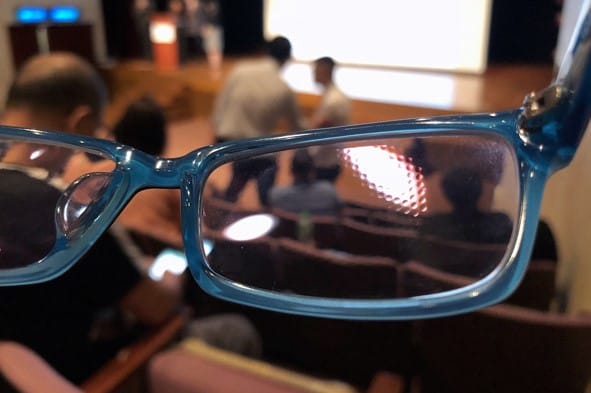
Glasses will remain a central aspect for the correction and management of myopic refractive error. They are well tolerated, easy to fit and minimally invasive. They are often the first option prescribed, particularly for young children. They are required as a back-up option in those who wear contact lenses and are needed for clear vision when using pharmacological treatment options. There are multiple spectacle lens options; from the classic single vision distance (SVD) lenses to complex new designs like the defocus incorporated multiple segments (DIMS) lenses.
SVD lenses give excellent distance clarity but have no useful efficacy for myopia control and, hence, are often used as the control group in studies. SVD lenses are the cheapest lens option, making them affordable for many people and therefore able to be updated more readily if changes in refractive error do occur. However, for controlling myopic progression, additional measures other than SVD lenses alone should be considered.
Bifocals have been investigated for decades around their potential to decrease myopia progression whilst providing distance clarity. It is hypothesised that they reduce accommodative demand or minimise any lag of accommodation, both of which can stimulate axial elongation of the eye. In the ‘80s, studies of bifocals showed limited or no efficacy1. In contrast, a recent study in Canada reported good efficacy, with a 35% reduction in axial length progression and a 50% reduction in dioptric change2. Children in this study were randomly allocated to a control group with SVD, a +1.50DS executive bifocal, or the same bifocal but with 3 base in prism incorporated into each eye to maintain near binocular position. Children with lower lags of accommodation responded better with the bifocal and prism combination, compared to the bifocal alone. Therefore, bifocals may have some potential benefit for myopia progression control in the right subset of the population. The bifocal segments should be fitted slightly high, 1-2mm below the pupil, and ideally with an executive segment to maximise the use of the addition portion of the lens, and to increase the area of the visual field affected by the add power.
Progressive addition lenses (PALs) have been extensively investigated, with the same underlying principle as bifocals. They have negligible impact on myopia progression when applied to all children with myopia. However, in children with esophoria and accommodative lag 30-40% efficacy has been reported3,4. A short corridor design is recommended so children can easily access the add portion of the lens. The majority of studies on PALs indicate statistical significance but not clinical significance5.
Specialised designs of lenses for myopia control using proprietary PAL-like designs have shown some efficacy in company studies, such as the Myopilux from Essilor which has recently made it to New Zealand shores but no current peer-reviewed literature is yet available. Another specialist myopia correction lens is the Zeiss Myovision lens, which uses a peripheral defocus to potentially decrease axial elongation, however, limited studies of efficacy are available.