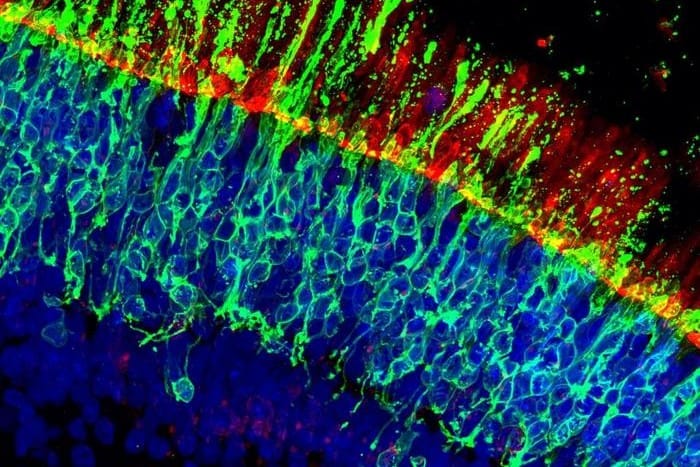
Scientists at the Institute of Molecular and Clinical Ophthalmology Basel (IOB) and collaborators have identified genetic pathways and compounds capable of protecting cone photoreceptors from the degeneration that underlies conditions such as age-related macular degeneration.
Testing more than 2,700 compounds in 20,000 lab-grown human retinal organoids, a clear pattern emerged: two kinase inhibitors consistently protected cones over extended periods, with inhibition of casein kinase 1 emerging as a key protective mechanism. The protective effects held across different stress conditions and were further confirmed in a mouse model of retinal degeneration, supporting their broader relevance.
Beyond identifying protective pathways, the study makes a comprehensive dataset publicly available, covering the compounds tested, their molecular targets and their effects on human cone survival, said co-first authors Stefan Spirig and Álvaro Herrero-Navarro. “This resource will guide the development of therapies aimed at preserving central vision and enable a systematic assessment of potential retinal toxicity.”