Long-term trends in keratoplasty in Aotearoa
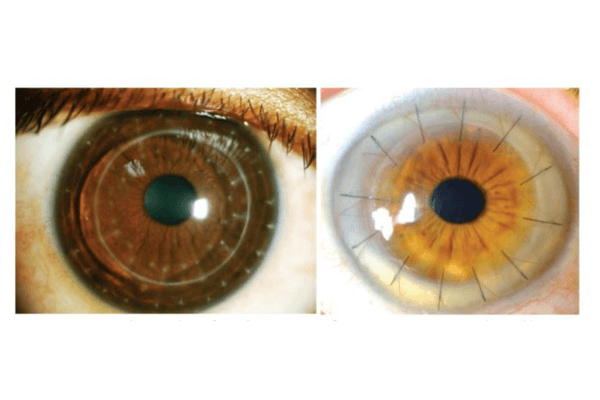
It has been more than 30 years since the New Zealand National Eye Bank (NZNEB) was established; in that time, Stats NZ has reported a dramatic 41% increase in New Zealand’s population. The NZNEB

It has been more than 30 years since the New Zealand National Eye Bank (NZNEB) was established; in that time, Stats NZ has reported a dramatic 41% increase in New Zealand’s population. The NZNEB

Polypoidal choroidal vasculopathy (PCV) has historically been considered a subtype of neovascular age-related macular degeneration (nAMD). It is characterised by recurrent serosanguinous maculopathy,

The use of corticosteroids in ophthalmology was first introduced in the 1950s by Gordon and McLean1. Corticosteroids exert their anti-inflammatory effects via the inhibition of arachidonic acid and

Sarcoidosis is a multisystem inflammatory condition characterised by non-caseating granulomas. It is a leading cause of inflammatory eye disease. Although the exact aetiology is unknown, sarcoidosis

In the early Sixties, driven by the efforts of pioneering dentist-turned-contact lens manufacturer Eugene Hirst (original co-founder of Mortimer Hirst in Auckland), New Zealand was the first country

The cornea is the most significant refractive structure of the eye, contributing two-thirds of the eye’s refractive power, the remainder coming from the crystalline lens. Normal values for corneal

In the human eye, the iris forms a diaphragm controlling the diameter of the pupil and therefore the amount of light reaching the retina. The eye is diffraction-limited, thus by varying the pupil

Case 1: Mrs B is a 55-year-old woman who was referred by her optometrist with suspected retinitis pigmentosa. She had no known ocular, systemic or family history of significance. On examination, her best corrected visual acuity (BCVA) was 6/6 on the right (plano/-0.25x85) and 6/7.5 on the left (plan

Uveitis-glaucoma-hyphaema (UGH) syndrome is a late, postoperative complication traditionally associated with implantation of anterior chamber (AC) intraocular lenses (IOLs) following cataract

Ophthalmic surgery requires microsurgical techniques to be executed with dexterity, precision and proficiency. Understandably, providing a risk-free environment to teach and practice microsurgical

The Royal Australian and New Zealand College of Ophthalmologists (RANZCO) has identified indigenous workforce development as a priority. Tackling this in New Zealand, Dr Simone Freundlich, the current

A 6-year-old female was referred by her GP with the chief complaint being right, upper lid swelling. Prior to that, there was a history of sinusitis with coryzal symptoms for a week. She was initially treated by her GP with oral antibiotics for 10 days and there was no improvement at all.