Getting to grips with RPD and AMD
Late last year a world-leading study was launched concentrating specifically on reticular pseudodrusen (RPD) and why they appear to be a high-risk phenotype for age-related macular degeneration (AMD) progression.

Late last year a world-leading study was launched concentrating specifically on reticular pseudodrusen (RPD) and why they appear to be a high-risk phenotype for age-related macular degeneration (AMD) progression.

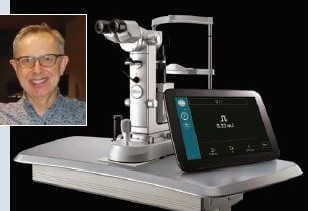
The LEAD study or Laser Intervention in early stages of age-related macular degeneration (AMD) trial was a world-first study into the safety and efficacy of the 2RT laser as a possible treatment for people with earlier stages of AMD to slow or prevent progression to late-stage AMD.

High prevalence of abnormal ocular surface tests in a healthy paediatric population

The impact of Covid policies on acute ophthalmology services - Moorfields Eye Hospital NHS Foundation Trust Louisa Wickham et al Eye (Lond), 2020 Jul 34(7): 1189–1192 The impact of Covid policies on

Ophthalmic surgery requires microsurgical techniques to be executed with dexterity, precision and proficiency. Understandably, providing a risk-free environment to teach and practice microsurgical

Immediate sequential bilateral cataract surgery (ISBCS) has become a more popular method for cataract surgery in recent years, and the pandemic has dramatically increased interest in this approach.

The Royal Australian and New Zealand College of Ophthalmologists (RANZCO) has identified indigenous workforce development as a priority. Tackling this in New Zealand, Dr Simone Freundlich, the current

Supplements in glaucoma management have been a topic of interest for a long time, especially for those of us who lose sleep over patients with progressive glaucoma where the usual intraocular pressure (IOP) lowering paradigm doesn’t work.

The TFOS DEWS II reports were published in 2017, bringing practitioners up to date on the scientific evidence related to dry eye disease (DED), including our current understanding of its pathophysiology, a consensus-refined definition, a more definitive approach to diagnosis and a review of manageme

With apologies to William Shakespeare for the title, this was indeed the question addressed in our recent literature review1. With increasing availability and focus on preservative-free drops, eye care practitioners have been left wondering if preserved artificial tears continue to have a place in t

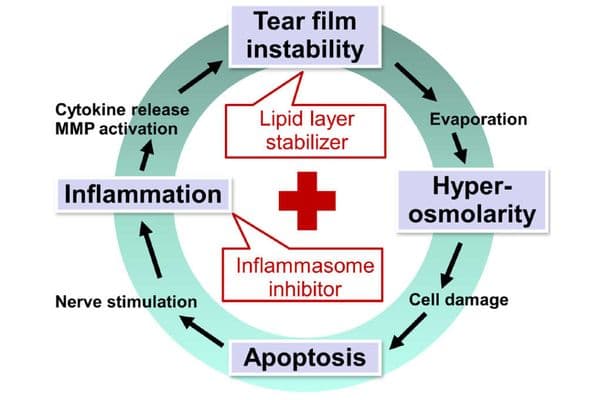
A recently awarded Health Research Council (HRC) project grant will investigate a novel eye drop that tackles the vicious circle of dry eye disease (DED), one of the most common, yet undertreated, chronic ocular surface conditions.

Dry eye disease is a common ocular surface disorder, resulting in one of the most frequently encountered complaints in ophthalmic practice. Whilst the disease is complex and multifactorial, inflammation is a common denominator in DED, which in turn causes further damage to the corneal epithelium and