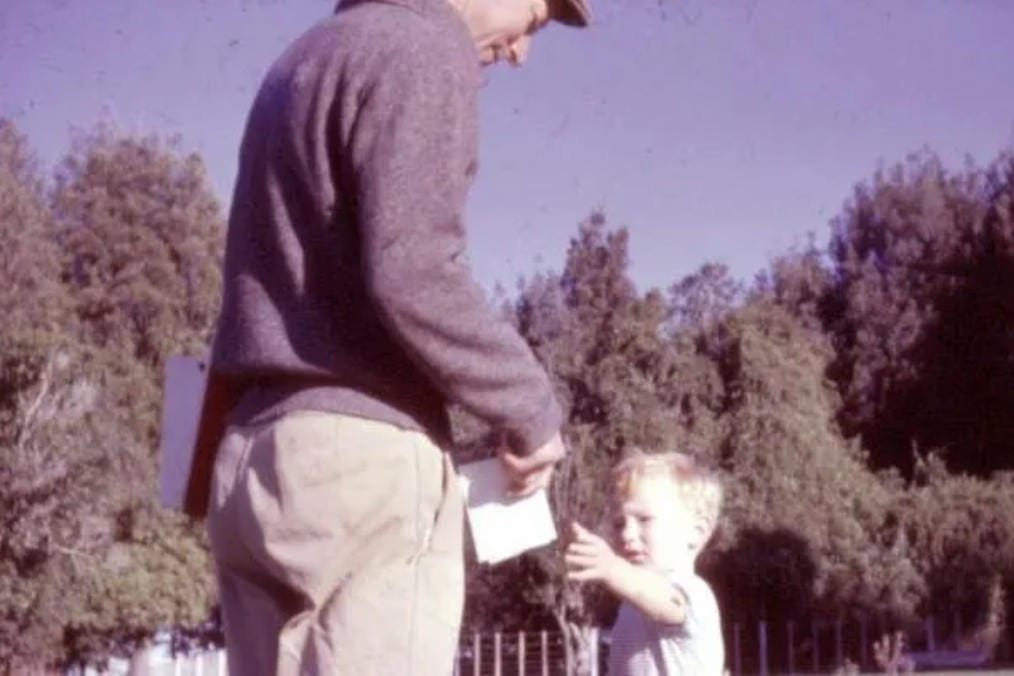
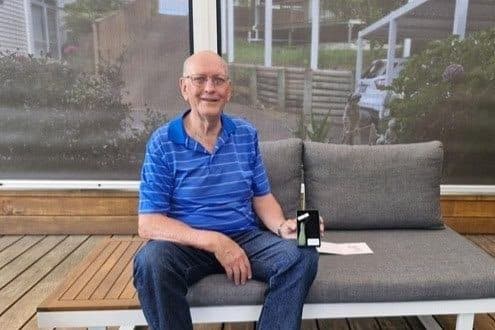
I watch the scalpel move delicately, doing its work like some exquisitely tiny spatula being slipped beneath a little egg. The surgeon describes each step as we go. Dad's quiet, just going along with it all. Throughout I'm doing my assigned job of holding his hand – something we would have last done when I was three years old.
Then a sound begins that had intrigued me during my own procedure a month before – a friendly musical tone that rises and falls. Now everything is clear: it's calibrated to the monitor reading out data, guiding the surgeon on depth and measurements. I watch the old lens being reduced to crumpled plastic tissue and removed. Out comes a 99-year-old lens, in goes a new intraocular one.
The surgeon tells him it's all done and that it went perfectly well. Dad exclaims that he didn’t feel a thing. You hear this and wonder if the whole thing was making sense to him all along. Or is he just saying that because he still knows what to say in a given situation – the vestigial muscle memory of social exchange?
They help him back into the wheelchair, we thank the nurse and sit for a moment while my sister brings the car to the door. Dad touches the bandage and says, "I've got something strange on my face.”
The whole experience was imbued with the gentle patience of everyone involved: the nurse who smiled when Dad hammed it up, the surgeon who took the time to explain each step knowing Dad might not retain it, the staff member who said to me "You can do that job". No one rushed him, spoke over him, or treated his memory loss as an inconvenience. They treated him with the same professional skill they'd shown me a month earlier, but with an added layer of kindness that acknowledged his 99 years.