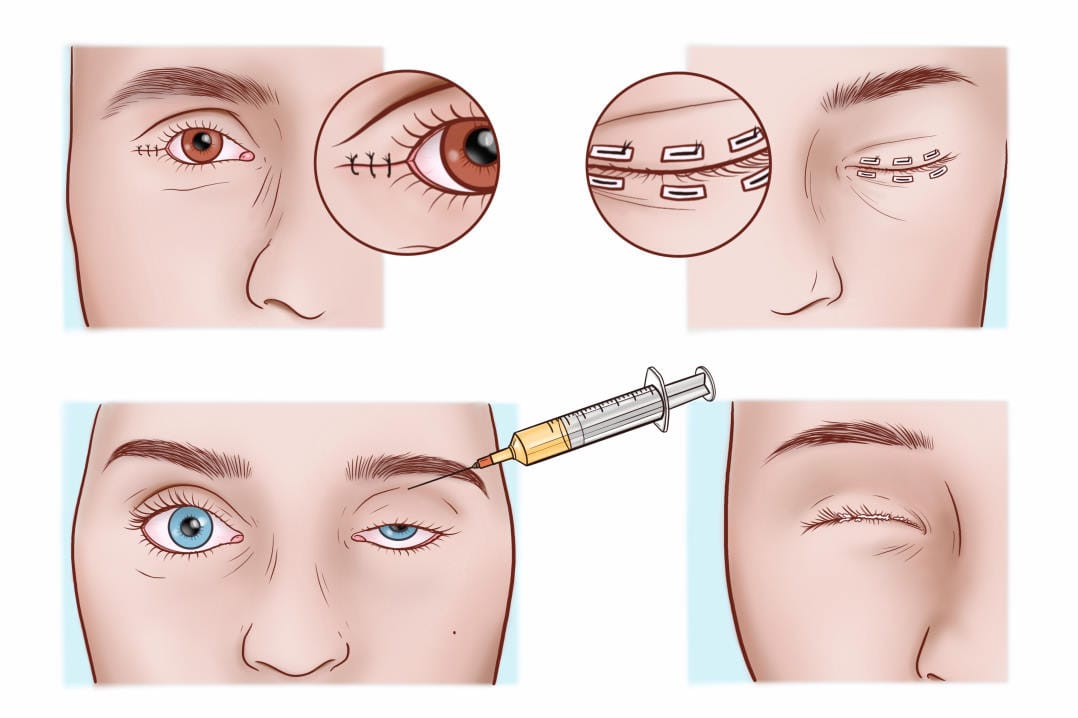
Dry eye disease (DED) is multifactorial in origin and, while intrinsic ocular surface pathology often garners the most attention, mechanical contributors, particularly those related to eyelid position and function, are sometimes underrecognised. In clinical oculoplastics practice, eyelid malpositions, such as entropion, ectropion and lid laxity, are common findings, especially in the elderly, and are frequently implicated in DED1.
The eyelids play an important role in maintaining ocular surface health2. They protect the corneal surface, distribute the tear film, express meibomian lipids and facilitate uniform corneal coverage through blink mechanics. Eversion of the lower lid (ectropion) can displace the punctum, leading to impaired tear clearance, epiphora and increased tear film osmolarity3. Entropion, on the other hand, can cause the eyelashes to abrade the corneal surface, inducing inflammation and epithelial breakdown4. Lid laxity contributes by preventing proper apposition of the lid and lid margin to the globe, allowing for poor tear distribution, increased evaporation and exposure keratopathy.
Many of these anatomical abnormalities are amenable to surgical correction, often with excellent outcomes. Even mild lower-lid malposition may be sufficient to perpetuate ocular surface symptoms and justify intervention. Procedures, such as lateral tarsal strip or lower lid retractor reinsertion, can restore normal lid-globe contact and reduce the dysfunctional anatomy, fueling the vicious cycle of DED3,4. By employing these simple, yet powerful oculoplastic techniques, significant improvements can be made to patient quality of life.