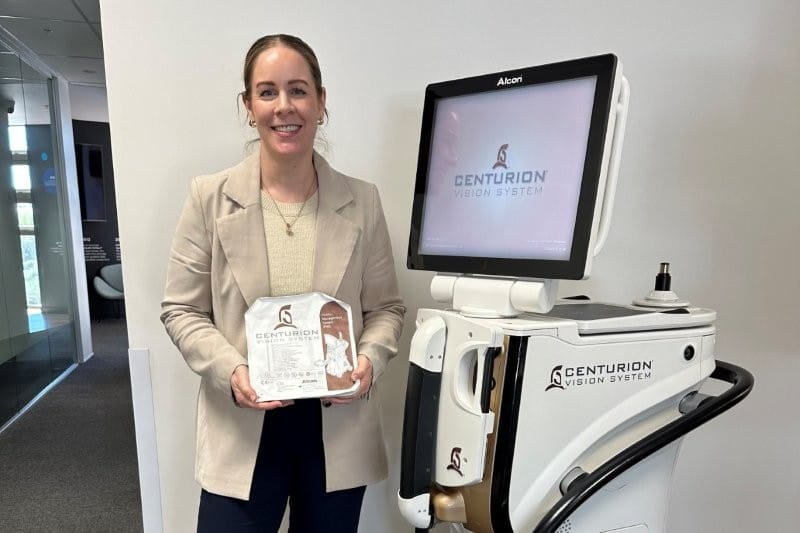
Alcon is cutting back on packaging material manufacturing and reducing waste going to landfills with five significant initiatives across its New Zealand surgical and vision care portfolios.
Given Alcon’s large footprint in this market (about 80% of the cataract surgery market share), efforts to reduce waste are going to have a significant impact, said Jennifer Cole, newly appointed commercial head of surgical for Alcon New Zealand, who’s driving the local fight against waste.
The first key initiative is removing the plastic trays from Alcon’s Centurion Fluidics Management System (FMS) when included in Alcon Custom-Paks. “Working with facilities using Centurion and Alcon Custom-Paks, we’ve been able to reduce the number of Centurion FMS plastic trays manufactured and delivered to New Zealand by about 75%,” Cole said. Previously, the Centurion FMS were packaged in rigid plastic trays inside the sterile pack, meaning the facility would need to dispose or recycle the tray once used, she said. “Now, Centurion FMS are packaged inside the blue, sterile sheet without the bulky plastic tray, with all the contents inside ready for the scrub team to use. The facility no longer has to dispose of or recycle the plastic tray once the surgical list is complete, it is simply not there! The change has meant a reduction in carbon footprint by elimination of dual sterilisation and reduced transport costs, as the packs are lighter, while also reducing material waste and waste to landfill.”
Alcon has also eliminated the plastic overwrap on intraocular lens (IOL) cartons, saving 1.92g of plastic per carton by replacing it with a sticker seal, and removed the dense paper ‘directions for use’ booklet, replacing it with a QR code card. Plus, it’s created smaller, lighter packaging for newer IOL products such as Clareon, said Cole.
Alcon has also expanded its partnership with Plastic Bank, to offset all plastics generated by its contact lens division, to include its surgical products too. For each ton of plastic introduced into the marketplace by Alcon, Plastic Bank will collect an equivalent amount of ocean-bound plastic in vulnerable coastal communities. For Australia and New Zealand, Alcon estimates it will support the removal of plastic waste equivalent to 4.9 million plastic bottles this year, said Cole.