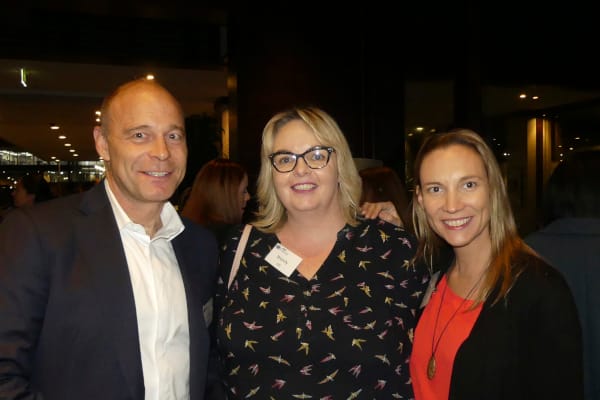
The first Eye Institute seminar of 2019 was hosted by Dr Nick Mantell, who introduced the surgery’s new marketing advisor, Janelle Brunton-Rennie, who’s worked with Dr Mantell in the past.
With a new marketing team in place, it was no surprise to see a new venue - the swish Sofitel in Auckland’s Viaduct Harbour - and a new format, including some great nibbles and a slightly longer programme. The mid-May, new Friday night timing was also a drawcard as the venue was packed to capacity, requiring an overflow room for some attendees who were able to watch the presentations on a large screen, while enjoying their wines.
BEB, ophthalmology myths and OCTs
Eye Institute patriarch, Dr Peter Ring kicked off proceedings with a look at benign essential blepharospasm (BEB), a neuropathological disorder characterised by abnormal blinking or spasms of the eyelids.
More common in women than men, symptoms can be caused by several factors including the environment and stress and can become so bad a patient can’t read, watch television, drive or walk, leading to anxiety and depression. Longer term outcomes include eyelid and brow ptosis, dermatochalasis, entropion and canthal tendon abnormalities and it should not be confused with keratoconjunctivitis sicca, Bell’s palsy, eyelid myokymia or hemifacial spasm, said Dr Ring, adding a family history of dystonia for blepharospasm will aid diagnosis. Treating BEB includes rest, support groups and sunglasses to help with photophobia, and dry eye disease treatments as this is often associated with BEB. Medicines aren’t particularly effective, however, as the central control centre is unknown, said Dr Ring, though anti-anxiety drugs can be helpful in some cases.