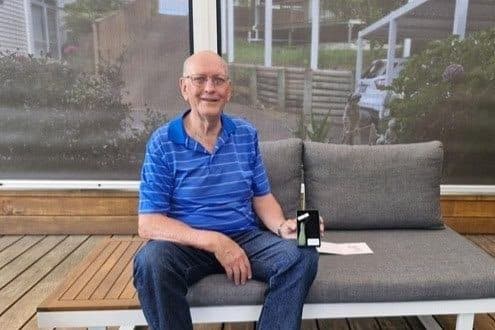
An 83-year-old retiree was referred to me for some assistance with reading. He told me on the phone about his long history of glaucoma treatment and discussions with his eye specialist indicated he had “reached the end of the road for treatment”. He was aware of reduced depth perception and concerned about the risk of falls. He was struggling to read and do crosswords but was quite enjoying listening to audiobooks.
As a result of his deteriorating vision, he and his wife were due to move into a retirement village and we agreed to hold off meeting until they were settled there.
Meanwhile, the ophthalmologist’s referral confirmed the history of primary open-angle glaucoma (POAG) with bilateral trabeculectomy, ongoing medication for the right eye, bilateral pseudophakia and, surprise, dry macular degeneration (AMD). The patient is virtually emmetropic in the right eye and has a moderately myopic left eye (-2.00/-1.00 x 90) using a single-vision distance prescription and reading unaided. My suspicion was that this prescription was originally a monovision outcome of cataract surgery performed a number of years ago, before a right non-ischaemic central retinal vein occlusion reduced his distance vision to hand movements and forced him back into spectacles for distance.