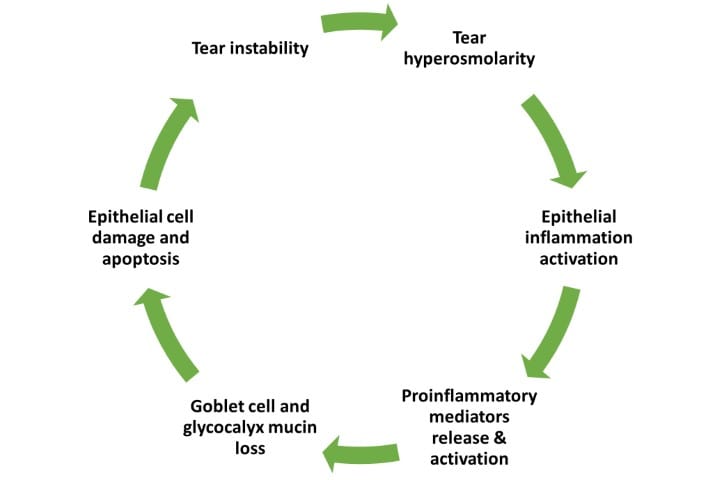
The optimal management of dry eye disease (DED) often seems an enigma. A recently published collaborative review by Ocular Surface Laboratory (OSL) and Buchanan Ocular Therapeutics Unit (BOTU) researchers at the University of Auckland outlined current anti-inflammatory options used in clinical management of the disease, including corticosteroids, cyclosporin A and serum topical drops, oral tetracyclines, omega-3 fatty acids and monoclonal antibodies1. The mechanism of action of these pharmaceuticals and their role in disrupting the vicious circle of DED and attempting to restore ocular surface homeostasis is evaluated within the review. While anti-inflammatory medications show clinical and symptomatic benefits in DED, it’s recognised they often fall short of providing safe, long-term relief. Associated side effects can pose sight-threatening risks and discomfort to patients, thus further research and development is needed to overcome these limitations and optimise the efficacy, tolerability and safety of available therapies.
Premium subscriber content
Sign in if you have a Digital or Print + Digital subscription. Don’t have one yet? Digital subscribers get full access to this article from $40/year +GST.
- Premium exclusive content
- Full digital magazine archive