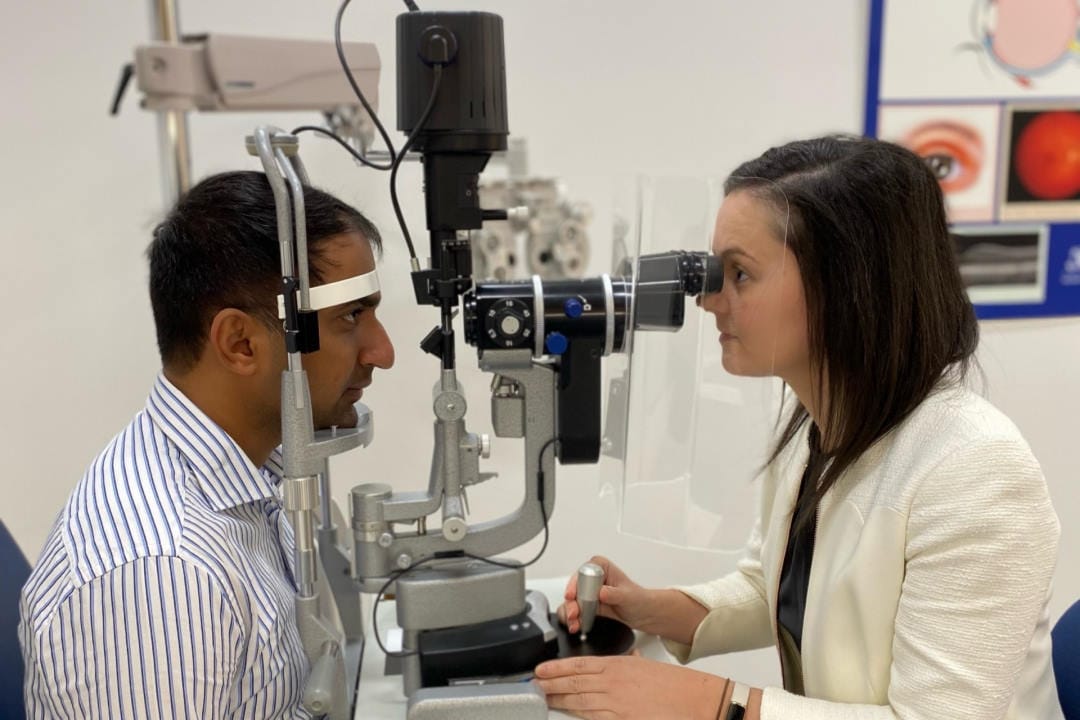
Dry eye disease (DED) is a highly prevalent condition that affects an estimated one in five adults1. However, early and accurate diagnosis of DED remains a clinical challenge as existing tests are invasive, time-consuming and inaccurate.
Currently, no single, objective method exists to both diagnose and subtype the condition, yet this is critical to inform targeted treatment. A key barrier to DED patients achieving optimal outcomes is the inability to reliably delineate the subtype of DED, for example, lipid from aqueous-deficient forms, to inform treatments with distinct mechanisms of action.
To address this clinical need, we have developed a new, rapid point-of-care device for accurate DED diagnosis and subtyping. In collaboration with a biomedical engineering group, led by Professor Leslie Yeo at the Royal Melbourne Institute of Technology (RMIT) University, we have developed and patented a new technology: acoustically driven microfluidic extensional rheometry2 (ADMiER). ADMiER uses microtechnology to quantify the extensional viscosity (stretchiness) properties critical in forming stable tear films. The team was the first to discover that tears from people with DED have altered stretchiness properties relative to individuals with healthy tears2.