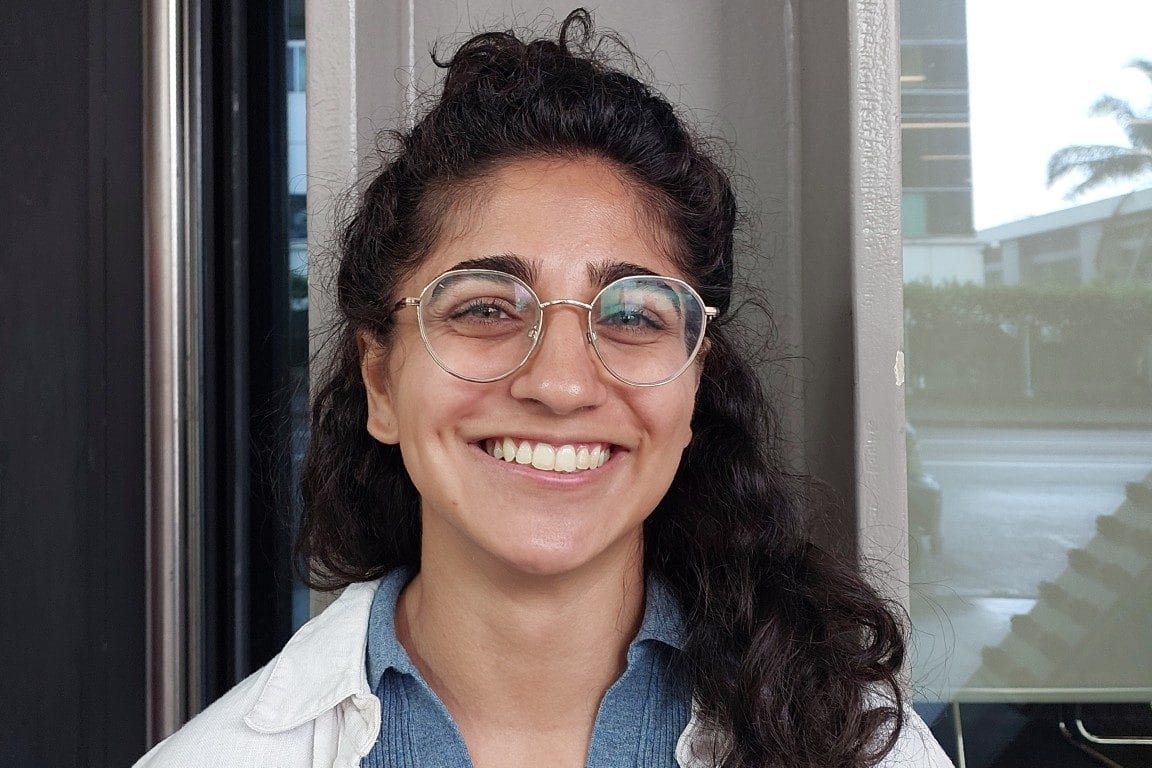
Sachi Rathod, a PhD student with the University of Auckland’s (UoA’s) School of Optometry and Vision Science, is this year’s recipient of the New Zealand Association of Optometrists (NZAO) Education & Research Fund scholarship ($12,000 over three years). With a keen interest in finance and health modelling, Rathod is looking to create a costed and validated model for a year 4 school screening pathway.
Post the Well Child Tamariki Ora checks, the current national screening pathway includes the B4 School Check and a second screening at age 11–12 (year 7). “Not only is there a giant gap between ages four and 11, but the way we do the screening in those school tests isn’t very accurate,” Rathod said. “Also… there are a lot of underserved communities that have a really hard time accessing follow-up care, hence reducing the whole value of screening if no treatments occur from it.”
For her PhD, Rathod will conduct vision screening at year 4 (age 8–9) and offer school-based eye tests using a photoscreener (a camera that estimates refractive error and determines which children are at risk of amblyopia), which is more accurate than conducting standard visual acuity testing, she said. She will also determine the effectiveness of the Enable subsidy.
“The research will allow us to do health economic modelling, looking at the cost and outcomes of screening with a photoscreener versus without one; examining if screening in year 4 is providing any benefit compared to not screening in year 4 [comparing with B4 School results]; and… most importantly, understand what kind of schools and what kind of patients want school-based eye tests,” she said. “If we know the cost of running school-based eye tests and we have a reasonable estimate of prevalence of refractive error and eye problems across the country, and we know what kind of patients will take up school-based eye tests and which won’t, then we have the answer for how much this would cost as a national policy.”
Dry eye and screening for 12-year-olds