Despite many available treatments, dry eye disease (DED) remains one of the most underdiagnosed and undertreated conditions in eyecare. Clinical trials to inform treatment development often have strict and narrow criteria and do not always represent the general patient population. Nor do they provide the ability to demonstrate longer-term treatment effects. To bridge this gap, clinical registries are valuable tools for gathering real-world data using a systematic methodology to monitor disease trends, treatment effectiveness, safety and outcomes over a long term1-3.
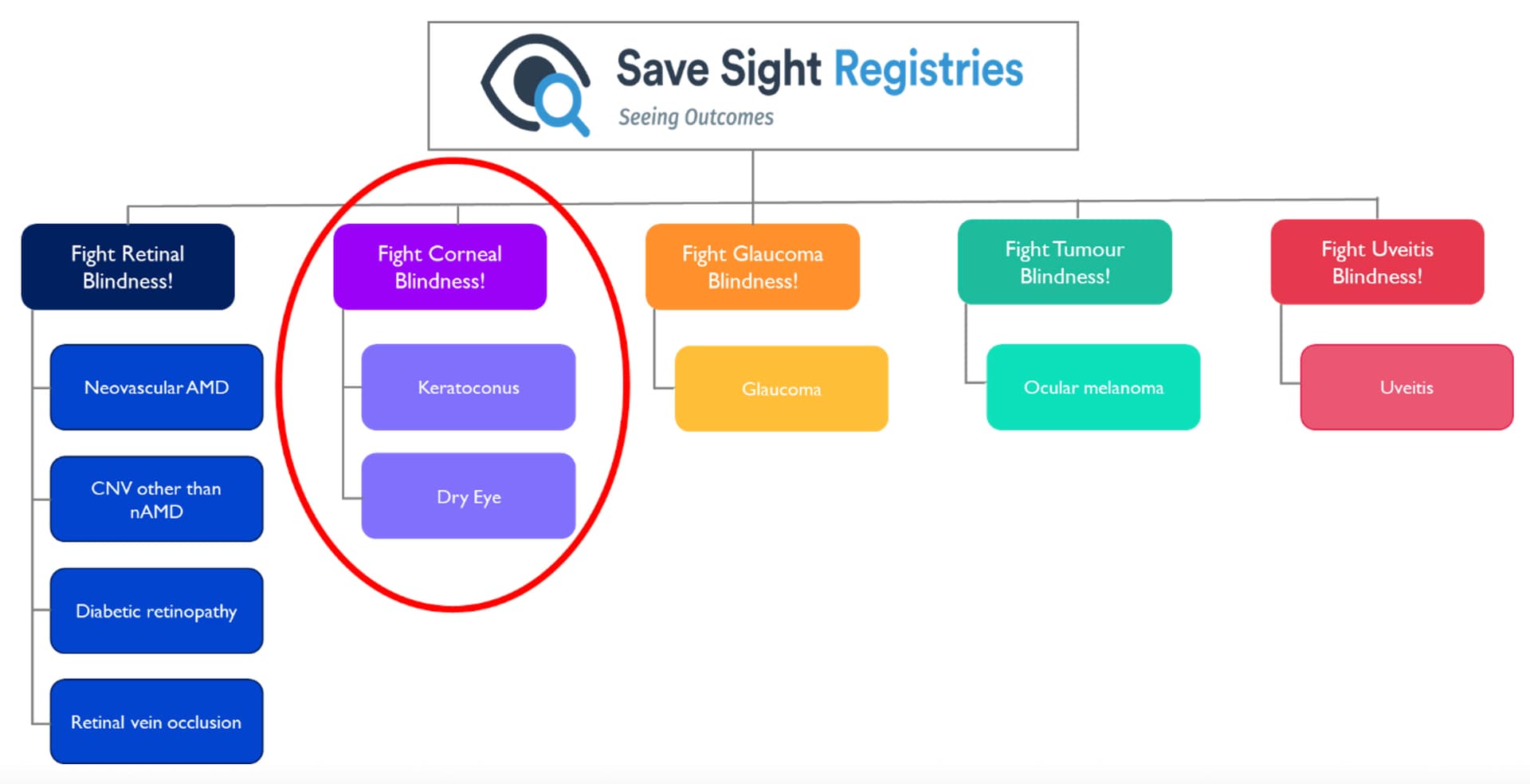
During the last decade, there has been a growth in the number of clinical registries in ophthalmology3; however, little is known about DED from registry outcomes capturing clinical outcomes in patients1. DED clinical registries have the potential to improve patient outcomes by evaluating the effectiveness of different treatments and providing data needed by ophthalmic practitioners for benchmarking1. These data can generate real-world evidence that can guide treatment decisions. The Save Sight Registries (Fig 1), designed to provide maximum data security and anonymity, are easy to use and offer users the opportunity to participate in national and international audits through publications and collaborations2 (Fig 2).