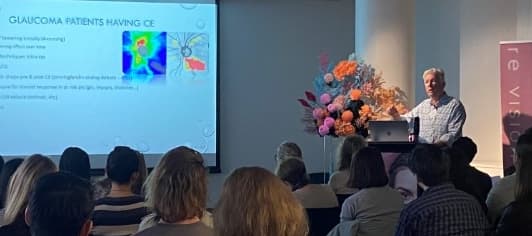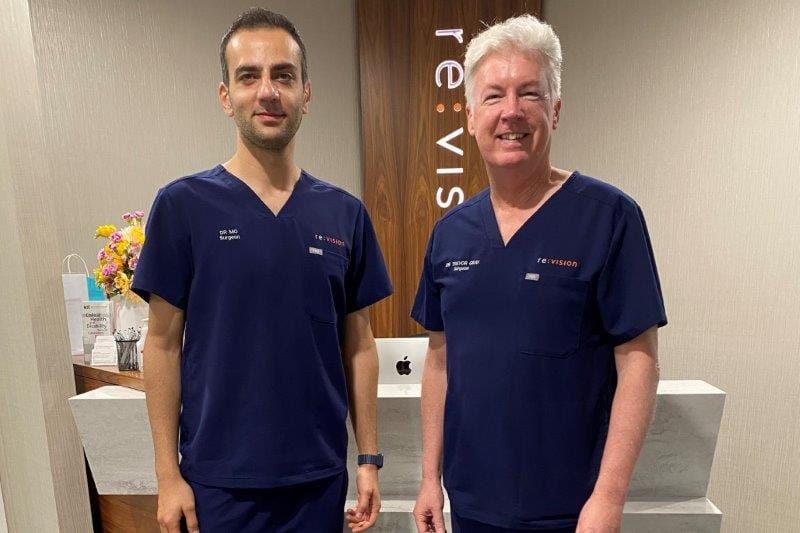
With the emphasis on ophthalmology supporting optometry to co-manage patients, Re:Vision partners Drs Trevor Gray and Mo Ziaei pulled together a lineup of speakers from a range of specialties and practices all over Auckland. Shoehorned in between breakfast and lunch were a dozen presentations from eight speakers plus two panel discussions. So we moved along at a rollicking pace, covering a lot of ground with very smooth baton changes.
Better referrals
First up was the University of Auckland’s Dr Hussain Patel, giving us the insider view of the triage of glaucoma referrals, mainly in the public health system. A good referral letter, he said, is one that does not need to be read. A balance of concise and need-to-know information makes it obvious to the triaging person (generally not the consultant) they cannot reject the referral, thereby keeping one more patient out of the public health system. Quick decisions about urgency need to be made (eg angle-closure signs or symptoms or significantly high intraocular pressures (IOP)) to establish who is sent through to the consultant, who should be seen within the next few months, and who can be managed in the community.
A good letter includes the reason for referral, visual fields and optic disc imaging or OCT, and best corrected visual acuity. Corneal thickness can also be helpful, as are significant histories relating to family (parent or sibling), ocular surgery or trauma, and medications such as beta blocker or prednisone use, plus any relevant retinal abnormalities that could affect results.
Dr Hussain encouraged the use of e-referrals for better and faster communication between referring optometrist, patient and hospital clinic, particularly if the referral is declined and the reason given. This enables the optometrist to follow up with the patient and stops people falling through the cracks. Sometimes a referral is declined as it is considered a high-quality referral and the referring optometrist can safely continue to manage the glaucoma, which makes it even more important to follow-up all referrals. Cataract referrals without the ‘Impact on Life’ form are automatically declined.