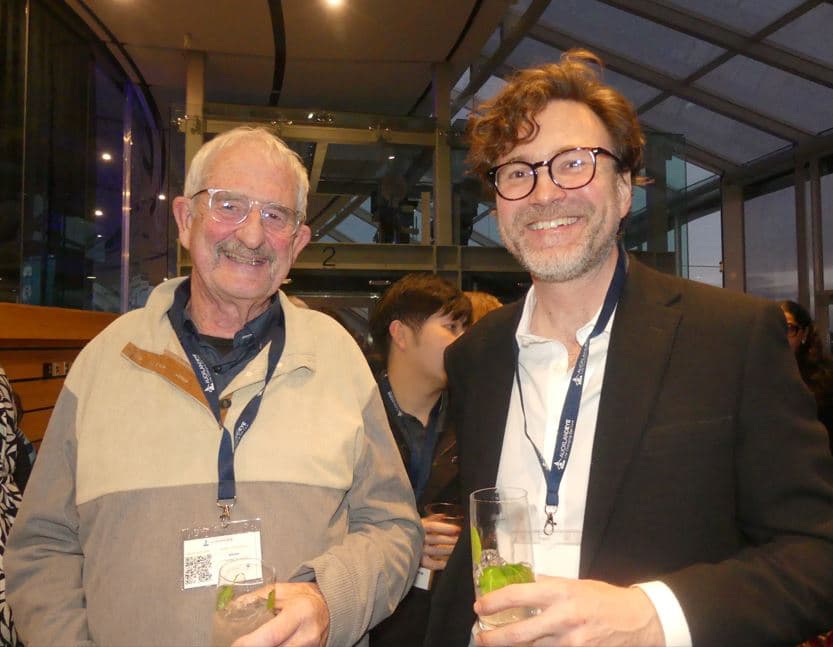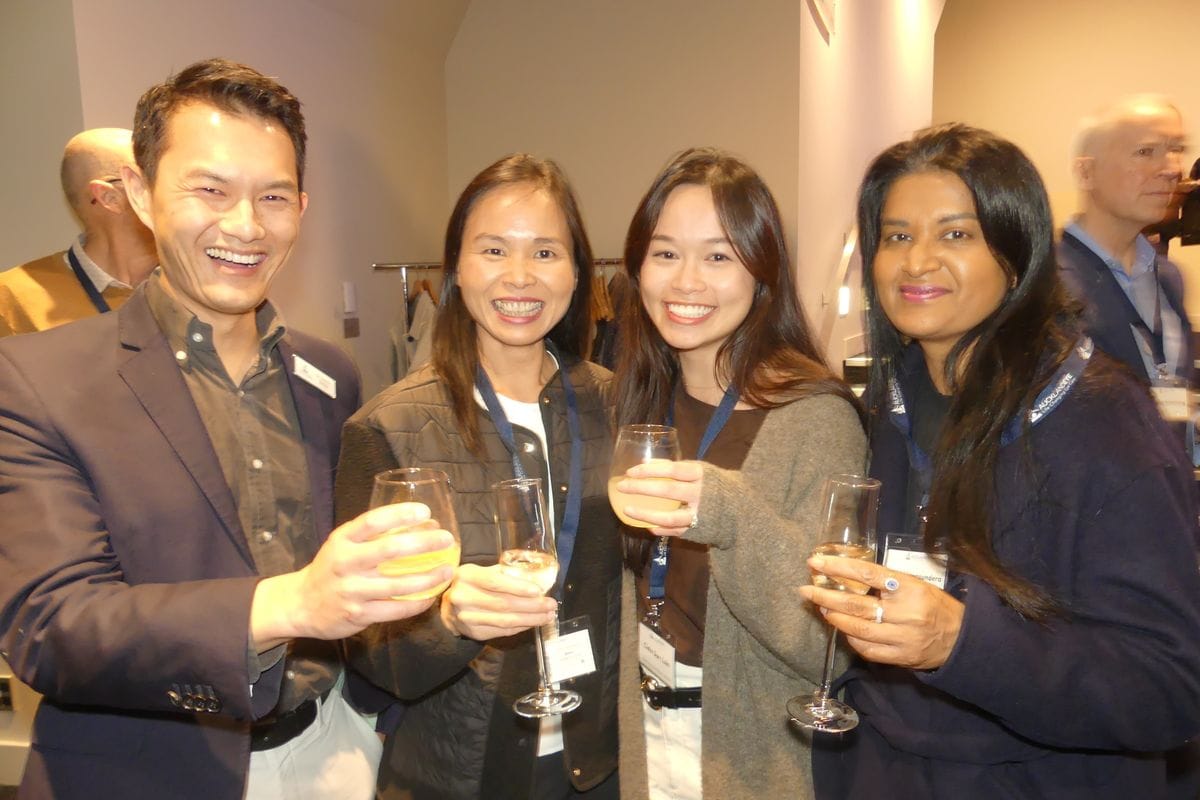
Held at the stunning Under the Dome venue in the Auckland War Memorial Museum, Auckland Eye’s August dinner seminar was aptly themed, ‘Vision through time: honouring the past, shaping the future’.
Amid the fairy lights inside and the lights of the city outside, Dr Justin Mora thanked the evening’s sponsors, Alcon, Glaukos, i-Lumen Scientific, OptiLight and Zeiss and introduced the evening’s talks.
Auckland Eye has been in existence for 32 years, he said, during which much has changed. It now has eight locations: six in Auckland plus practices in Whangarei and Queenstown; it launched the first dedicated dry eye clinic in New Zealand; has the largest sub-specialty expertise in the country; and runs shared-care myopia clinics. Details of its dedicated referral pathway and manual, covering most ophthalmic conditions, can be found on its website, which is now available in multiple languages and in text-to-speak mode. So things certainly have changed, said Dr Mora, before introducing one of Auckland Eye’s longest-serving partners, Dr Stephen Best.

Optic neuropathy to corneal donation substitutes
Dr Best discussed three optic nerve cases, all of a similar age but with different underlying pathologies to demonstrate diagnosis differences. Contrary to common opinion, ophthalmologists don’t order scans all the time, he said. “But when a patient has bilateral disc swelling, unusual, atypical unilateral swelling or they are in an age group where you think, ‘what else is going on?’, they need scans.”
Non-arteritic anterior ischaemic optic neuropathy (NAAION), the autoimmune inflammatory condition neuromyelitis optica spectrum disorder and optic nerve meningioma can all cause vision loss in one eye. Correct diagnosis is important as treatment and prognosis differ significantly. If a patient has sudden onset of vision loss, think vascular pathology; rapid onset, inflammatory pathology; and slow onset, compressive lesion.
Auckland Eye’s newest member, Dr Bia Kim, then tackled the increasing lack of donor corneal tissue with only one in 70 patients who need a corneal transplant currently receiving one. Help is on the horizon, however, with several synthetic alternatives in development, including artificial corneas (, C-Clear and ); tissue-engineered corneas, including decellularised corneal scaffolds and collagen-based hydrogels; induced pluripotent stem cell-based therapies; and regenerative or gene-based therapies.