It wasn’t until 1995 that photorefractive keratectomy (PRK) was first approved for commercial use, with LASIK coming along four years later in 1999. In 2011 ZEISS brought a new innovative approach to laser eye surgery with the launch of small incision lenticule extraction (SMILE). SMILE made use of the VisuMax femtosecond laser (Carl Zeiss Meditec, Jena, Germany) to create lenticule planes. With the plane created, the lenticule is manually extracted by the surgeon through a laser-generated access cut. Since its launch, the clinical advantages of SMILE have led to it becoming an increasingly prominent and trusted procedure. To date over 7 million surgeries have been performed by more than 2,500 surgeons globally.
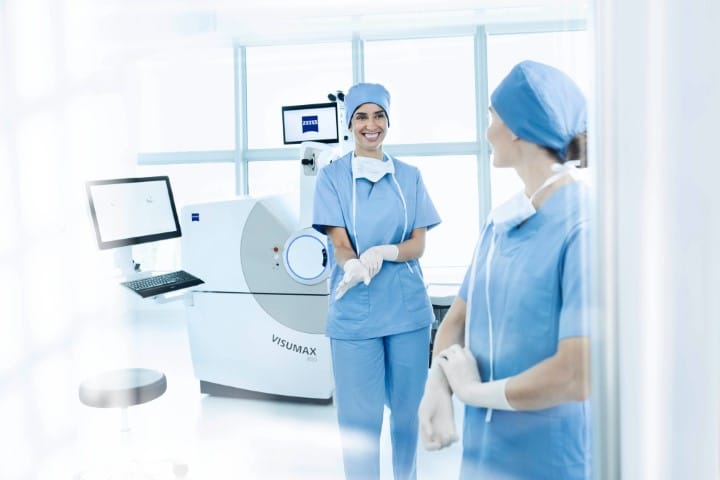
In 2021, some 10 years after its original launch, the VisuMax Femtosecond Laser was succeeded by the VISUMAX 800 femtosecond laser – the ZEISS development team having spent five years building on the success of the original VisuMax to create a new evolution femtosecond laser. This internal expertise, coupled with knowledgeable input from corneal refractive surgeons and learnings from 10 years of experience with SMILE, were applied to optimise the performance of the new laser.
A significant development of this new laser was an increase in speed, with a four-fold faster laser repetition rate compared to the VisuMax, allowing users to create the lenticule in less than 10 seconds and complete a flap cut in approximately five seconds.
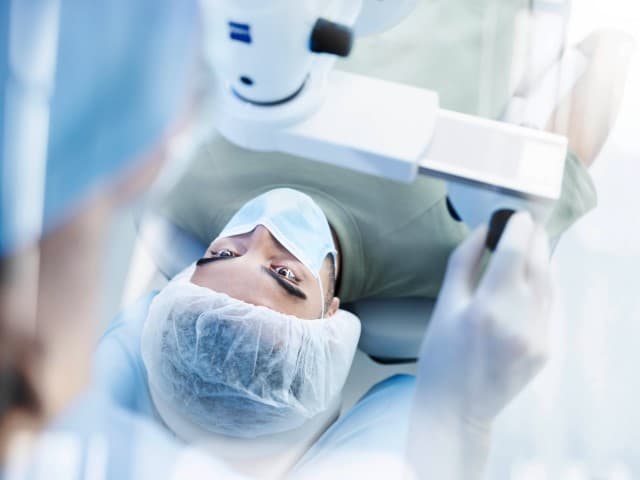
Physically and operationally, the VISUMAX 800 differs from its predecessor, having separate laser and microscope arms and using heads-up docking, which is achieved by lowering the laser onto the eye rather than by raising the bed. With the moving parts integrated into the laser arms and no attached bed, the design results in a smaller footprint than the VisuMax. Clinically the VISUMAX 800 also adds digital cyclotorsion and a centration guide, allowing more precise treatments with more enhancements to follow.
The new design boasts two screens: one is used for data management before surgery and can also be used by the theatre assistant to observe the procedure, while the other provides comprehensive visualisation during docking and throughout the surgery, thereby ensuring ergonomic comfort for the surgeon.