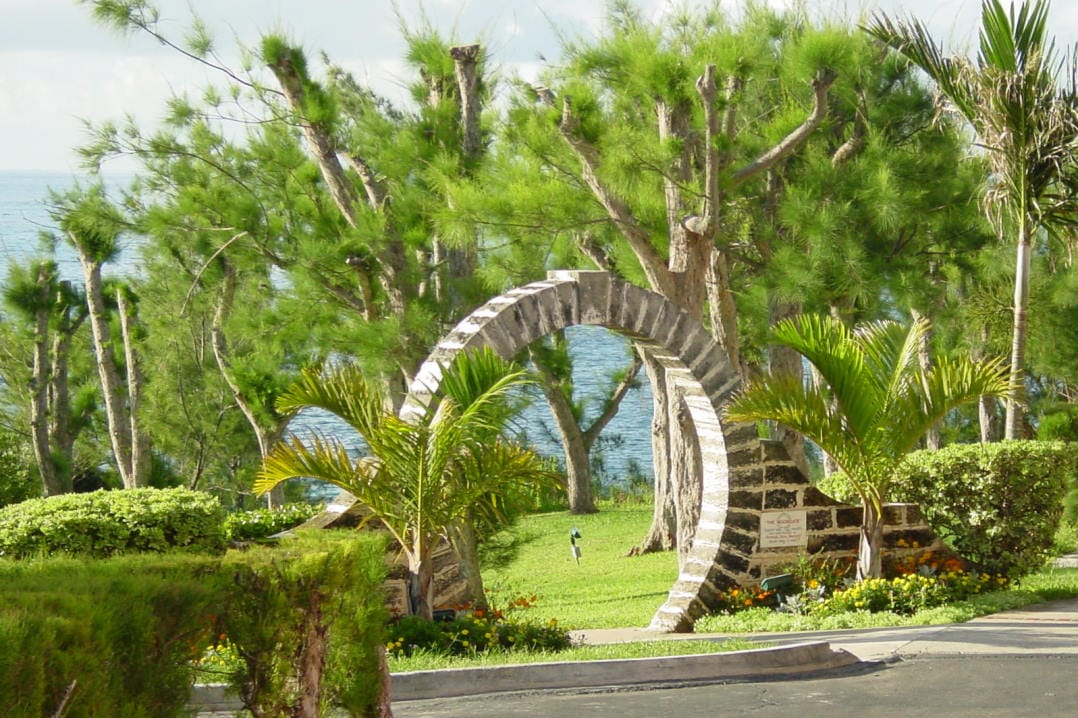
For me, it all began with a moongate. While a graduate student at Dartmouth Medical School (Hanover, US) in the mid-1970s, one of my mentors, the internationally renowned corticosteroid endocrinologist, the late Emeritus Professor Allan Munck, organised an exclusive meeting of approximately 25 steroid hormone experts from around the world in a mansion behind a moongate in Bermuda. Although, being a graduate student, I was not invited, I thought the meeting was an amazing idea. I dreamed that if I ever became a faculty member, I would also like to organise a medical research conference behind a moongate in Bermuda and invite people from all over the world.
My dream came true in November 1992. After requesting input from many global colleagues, I organised the first International Conference on the Lacrimal Gland, Tear Film and Dry Eye Syndromes: Basic Science and Clinical Relevance. This three-day conference was held in the Southampton Princess Resort, located behind a moongate in Bermuda, attracted 175 participants from all over the world and resulted in a 729-page Proceedings book1. As part of this conference, I had asked Professor Michael Lemp to give a presentation about clinical trials and dry eye. He was so appalled at the lack of information that he proposed “an academic-clinical practice-industry-governmental effort to develop a consensus” for clinical trial design to evaluate treatments for dry eye. This led to Prof Lemp's organisation of the NEI Industry Workshop with Professor Anthony Bron and Dr Daniel Nelson.
One more outcome was that many people wanted another conference. Consequently, I organised a sequel, also held in Bermuda, in November 1996. This three-day meeting involved 230 participants and resulted in a 1,051-page book2. The success of this second Bermuda conference, in turn, led to my organisation of the third conference in Maui in November 2000, attended by 310 participants and resulting in a 1,385-page book3.