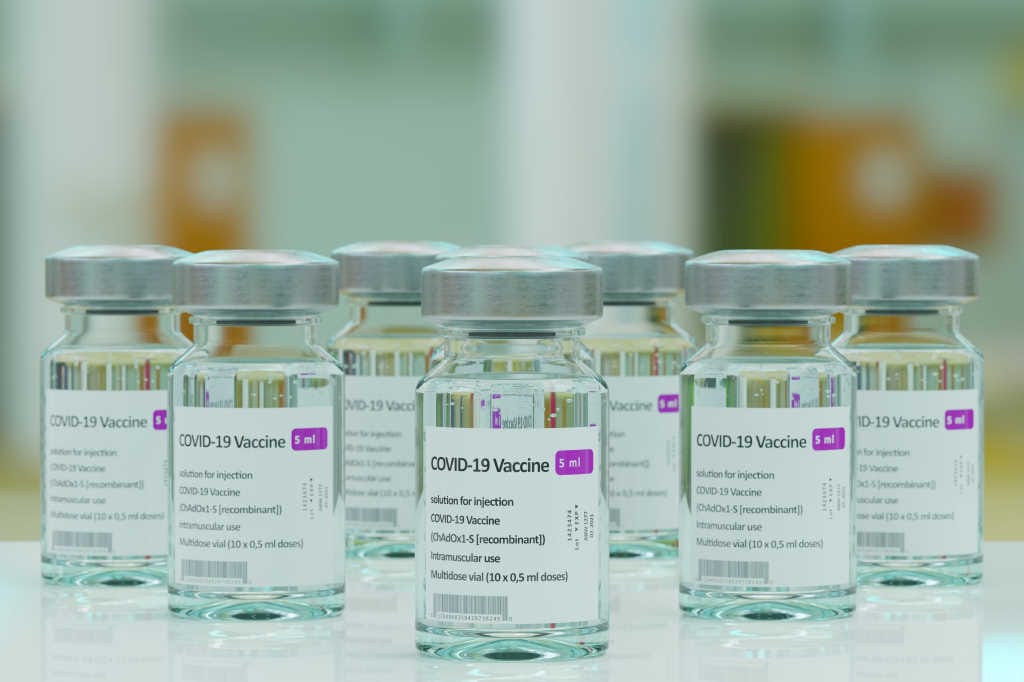
When the first Pfizer-BioNTech jab was given to 91-year-old Briton Margaret Keenan in December 2020, it gave the world hope that an end to the Covid-19 pandemic was achievable. But it also had everyone wondering how safe such a quickly developed vaccine could be. Of the seven vaccines approved by the World Health Organisation (Pfizer’s, Janssen’s (Johnson & Johnson), Moderna’s, AstraZeneca’s, Sinopharm’s, Serum Institute of India’s, and Sinovac’s), Pfizer’s has been field tested more than any other (33 trials in 16 countries), with 100 countries sanctioning its use.
At the time of writing, around 2.84 billion (36%) of the world’s population is fully vaccinated, with the vast majority experiencing no or minimal side effects. However, in Europe in early 2021, AstraZeneca’s vaccine made the headlines when reports surfaced associating it with blood clots. So, could the new vaccines potentially affect eye health?
Visual disturbances
A report published in June 20211 stated a patient suffered from a subjective reduction in visual acuity three days after receiving their second dose of Pfizer’s vaccine. The patient experienced a sudden onset of darkening of the visual field, normally associated with visual distortion. There was no further investigation, however, because the vision problem subsided the same day.
A different June 2021² paper described a 27-year-old female patient who experienced visual disturbances in her left eye three days after her first AstraZeneca vaccine dose. During examination, best-corrected visual acuity was 20/20 in both eyes. However, during a vision field test, the left eye showed a modest paracentral scotoma in the upper temporal quadrant. There were no signs of inflammation and pressure in both eyes was normal. In this patient's case, the symptoms indicated acute macular neuroretinopathy (AMN).