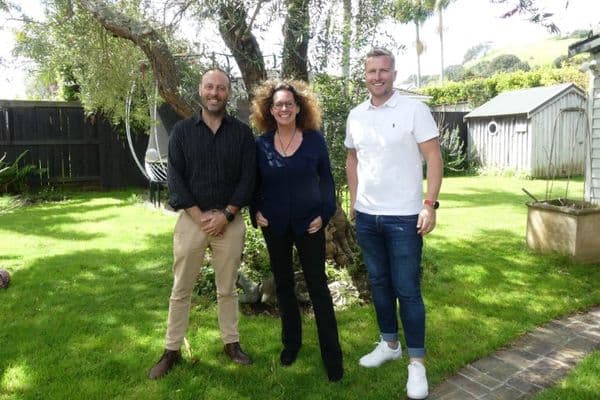
Pilot boosts support for patients with vision loss
A recent pilot showed strengthened referral pathways increase access to support for people living with low vision or blindness.

A recent pilot showed strengthened referral pathways increase access to support for people living with low vision or blindness.

LINK: https://www.nzoptics.co.nz/live-articles/self-preservation-masquerading-as-professional-protection/

It is with deep sadness that we share the sudden passing of our esteemed colleague and friend, Dr Tracey Wong, after a brief illness.

Links: https://www.nzoptics.co.nz/live-articles/letter-time-for-adonz-to-take-over-odob-s-role/

While most cases of dry eye disease respond well to established treatments, there is a subset with severe dry eye that may need other options. Serum eye drops have been successfully used for decades for conditions including persistent epithelial defects and neurotrophic keratopathy. Increasingly, th

Assessing a novel topical selenium disulphide treatment for MGD

David Slack on his dad's cataract surgery and the eyecare professionals who make it all possible

Despite many available treatments, dry eye disease (DED) remains one of the most underdiagnosed and undertreated conditions in eyecare. Clinical trials to inform treatment development often have stric

Researchers Professor Jennifer Craig and Dr Michael Wang at the Ocular Surface Laboratory, along with University of Auckland Visiting Professor James Wolffsohn, other international collaborators, and TFOS ambassadors, conducted and analysed one of the largest global surveys on the current clinical p

As a practice owner or manager, you know the feeling of multitasking. Day-to-day, working on your business fundamentals generally takes a back seat to the primary goal of taking care of your patients. The good thing is it doesn't take as much time, effort or money to get your practice to-do lists do

Photobiomodulation (or LLLT) for AMD is now available in New Zealand

Dry eye disease (DED) is multifactorial in origin and, while intrinsic ocular surface pathology often garners the most attention, mechanical contributors, particularly those related to eyelid position and function, are sometimes underrecognised. In clinical oculoplastics practice, eyelid malposition