OCT’s role in angioedema care
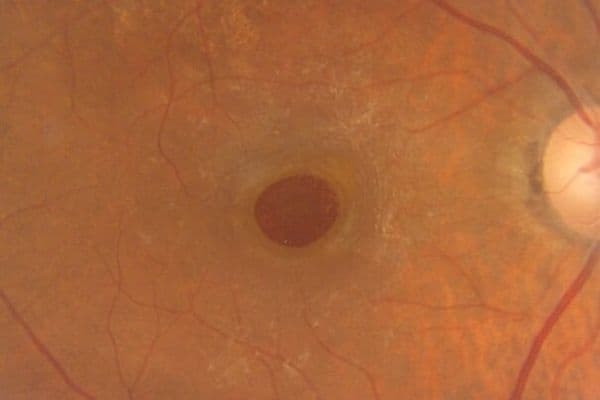
An Italian study of type 1 hereditary angioedema (HAE) found patients’ subclinical retinal abnormalities support the potential role of Spectral-domain OCT/OCT-angiography as a useful tool in patients’

An Italian study of type 1 hereditary angioedema (HAE) found patients’ subclinical retinal abnormalities support the potential role of Spectral-domain OCT/OCT-angiography as a useful tool in patients’

A report from the Fred Hollows Foundation shows the return on investment (ROI) for eye disease interventions are among the highest of any disease modelled on similar investment scenarios. On average, cataract surgery returns US$20.50 for every dollar spent while refractive error treatments return US

A US study, published in JAMA Ophthalmology, has shown home modifications, particularly to lighting, can improve physical activity levels in visually impaired older adults.

A UK study, published in New Scientist, found blue-eyed individuals were better able to read in dimmer lighting conditions compared with brown-eyed subjects.

Researchers from Fraunhofer Institute for Computer Graphics Research (IGD) have developed a new artificial intelligence (AI)-driven, automated method for 3D printing prosthetic eyes, which is now in u

AI in eyecare will play an important role in alleviating future public health challenges, says Dr Pearse Keane, Moorfields consultant and professor of artificial medical intelligence at UCL

Using a mindfulness-based breathing technique reduces intraocular pressure (IOP) and serum cortisol levels and improves autonomic dysfunction in patients with primary open-angle glaucoma (POAG), a stu

Tiny solar panels placed at the back of the eye could help patients recover from sight loss, a University of Surrey study has found. For most sufferers of age-related macular degeneration ther

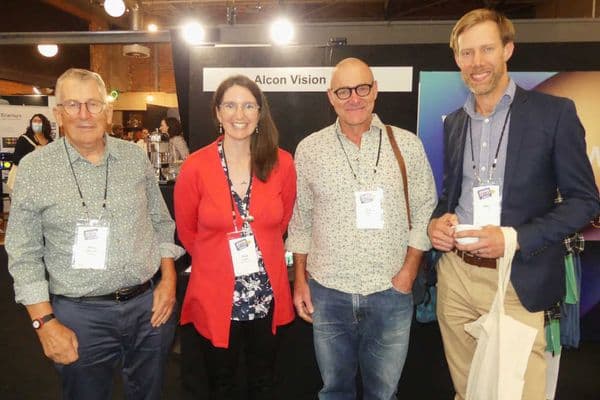
Hosted at Auckland’s Cordis Hotel, the Royal Australian and New Zealand College of Ophthalmologists’ (RANZCO’s) New Zealand Annual Scientific Meeting is booked for 16-18 May 2024.

Glaucoma poses a significant threat to vision if left untreated. With 112 million people estimated to be affected by 20401, it ranks globally as the second leading cause of blindness2, emphasising the essential role of adherence to ocular hypertensive medications in preventing irreversible vision lo

A new shared-care e-Learning course for implantable collamer lenses (ICL) for optometrists in New Zealand and Australia has been unveiled by Device Technologies in collaboration with Staar Surgical.

International consortium BIENCO has been awarded AU$35 million to further the development of bioengineered eye tissue to treat corneal blindness.