

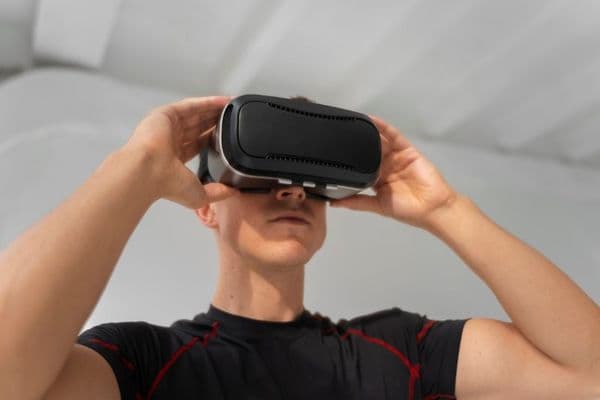
Better ocular health via VR gaming
A Japanese study found that short-term virtual-reality (VR) headset use increased tear-film lipid-layer thickness in healthy adults.
Staff reporters2 min read
A Japanese study found that short-term virtual-reality (VR) headset use increased tear-film lipid-layer thickness in healthy adults.

Within the elegant surrounds of the Christchurch Club, over 120 guests gathered in October to mark a significant milestone: the 10th anniversary of St George’s Eye Care, the private ophthalmic practice within St George’s Hospital.

When has a tiny toy puppy ever raised $2000 for charity? When MC Stephen Caunter turns auctioneer and coaxes money from delegates to support Blind Low Vision NZ’s (BLVNZ’s) Guide Dog Services.

Lovingly crafted by dispensing optician and artist Michael Warner, sculpture Awhi (Hug), has been welcomed into the Hospice Taranaki fold this spring.

Pharmac announced it has completed the first 90-day phase of its 12-month Reset Programme, intended to improve transparency and engagement following external reviews of the agency’s operations.

This has been a productive year for the New Zealand Optometry Student Society (NZOSS), marked by continued growth and fresh takes on our established events. In 2025, we delivered 19 events, including collaborations with other faculties and Australian universities. Student engagement reached all-time

A study found time outdoors offered limited benefit for pre-myopic children to prevent or delay myopia onset. Evidence of a protective effect was only present in the highest exposure group, su

A new clinical study found Essilor Stellest 2.0 spectacle lenses with highly aspherical lenslet target (HALT) MAX technology offer significantly higher efficacy in slowing axial elongation compared w

IMI's new White Paper: Evidence from animal and human studies confirms outdoor time as a key strategy for delaying myopia onset.

The term ‘compassion fatigue’ is often applied as the personal cost of caring, but new research from the University of Auckland suggests the phenomenon could in fact be a self-fulfilling prophecy.

A new study associated virtual reality (VR) headset use with a reduced risk of dry eye in healthy patients, which authors said is due to elevated temperature inside the headset. While previous

Researchers at the UK’s Aston University will assess how screen use affects babies and their families during the first 1,001 days of life. The work, commissioned by the 1001 Critical Days Foundatio