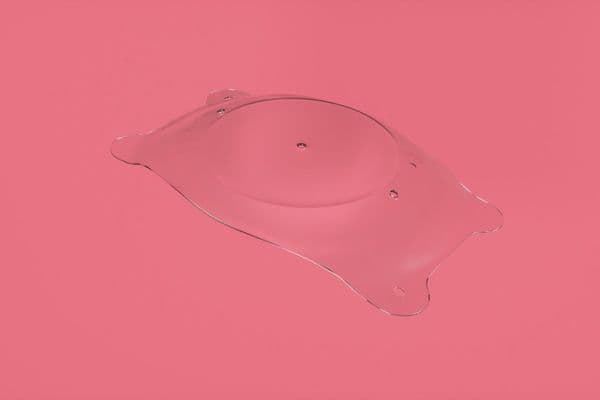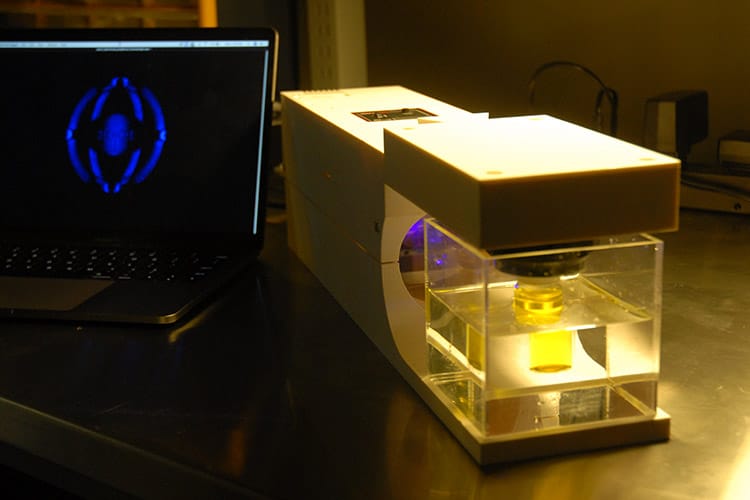
Researchers at the University of California, Berkeley, have developed a new 3D printer they say could print clear, soft hydrogels around tiny electronic circuits to make smart contact lenses.
The printer, which projects rays of light into a gel to harden it in the desired shape in minutes, overcomes some of the drawbacks of traditional 3D printing, which lays material down layer by layer to create a model, researchers told The Guardian.
Nicknamed the “replicator” by the inventors — after the Star Trek device that can materialise any object on demand — the 3D printer can create objects that are smoother, more flexible and more complex than what is possible with traditional 3D printers. It can also encase an already existing object with new materials — for instance, adding a handle to a metal screwdriver shaft — which current printers struggle to do.
The technology has the potential to transform how products from prosthetics to eyeglass lenses are designed and manufactured, said Hayden Taylor, assistant professor of mechanical engineering at UC Berkeley. “I think this is a route to being able to mass-customise objects even more, whether they are prosthetics or running shoes.”
Building objects layer by layer leads to a “stair-step” effect along the edges, he said, adding that traditional 3D printers also have difficulty creating flexible objects because bendable materials could deform during the printing process and supports are required to print objects of certain shapes, like arches.