Pigmented paravenous retinochoroidal atrophy (PPRCA) is a rare form of retinochoroidal atrophy characterised by pigment accumulation along the retinal blood vessels.
Case
A 61-year-old woman was urgently referred to a public clinic after being incidentally noted to have bitemporal hemianopia. She was otherwise asymptomatic with vision of 6/6 in both eyes and no other concerns. The anterior segment examination was normal and colour vision was full in both eyes. Retinal assessment through undilated pupils revealed normal optic discs. No retinal pathology was noted at that stage.
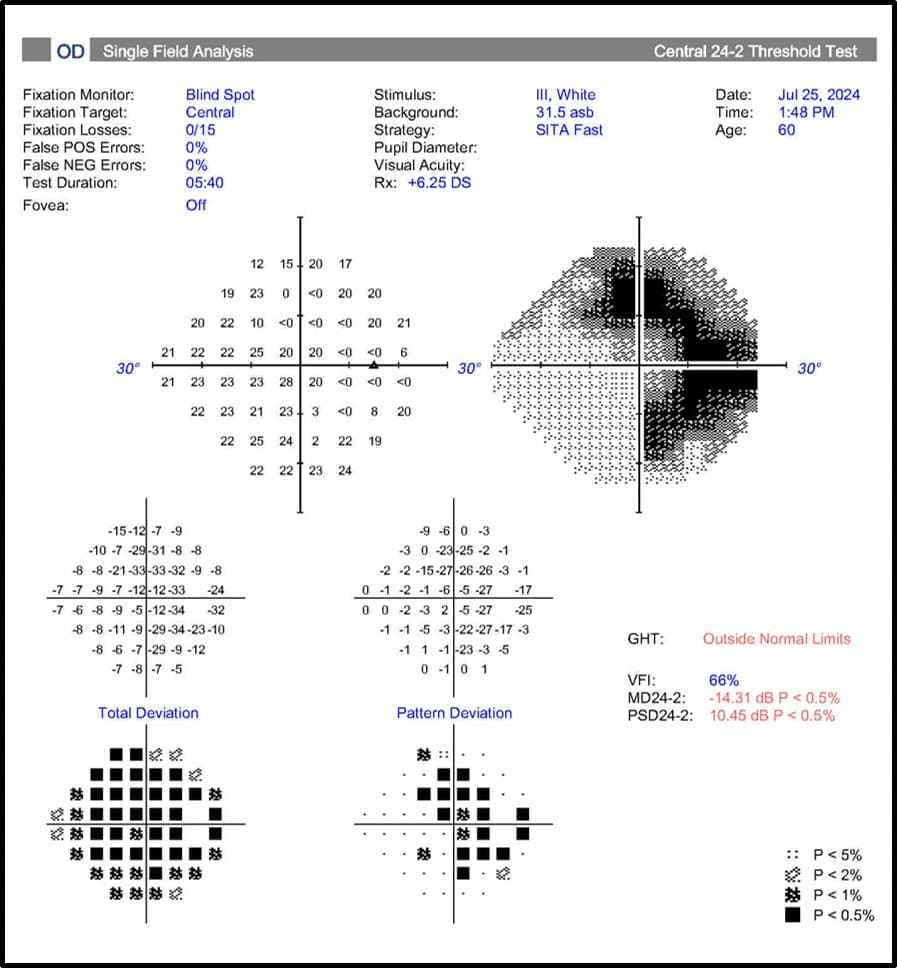
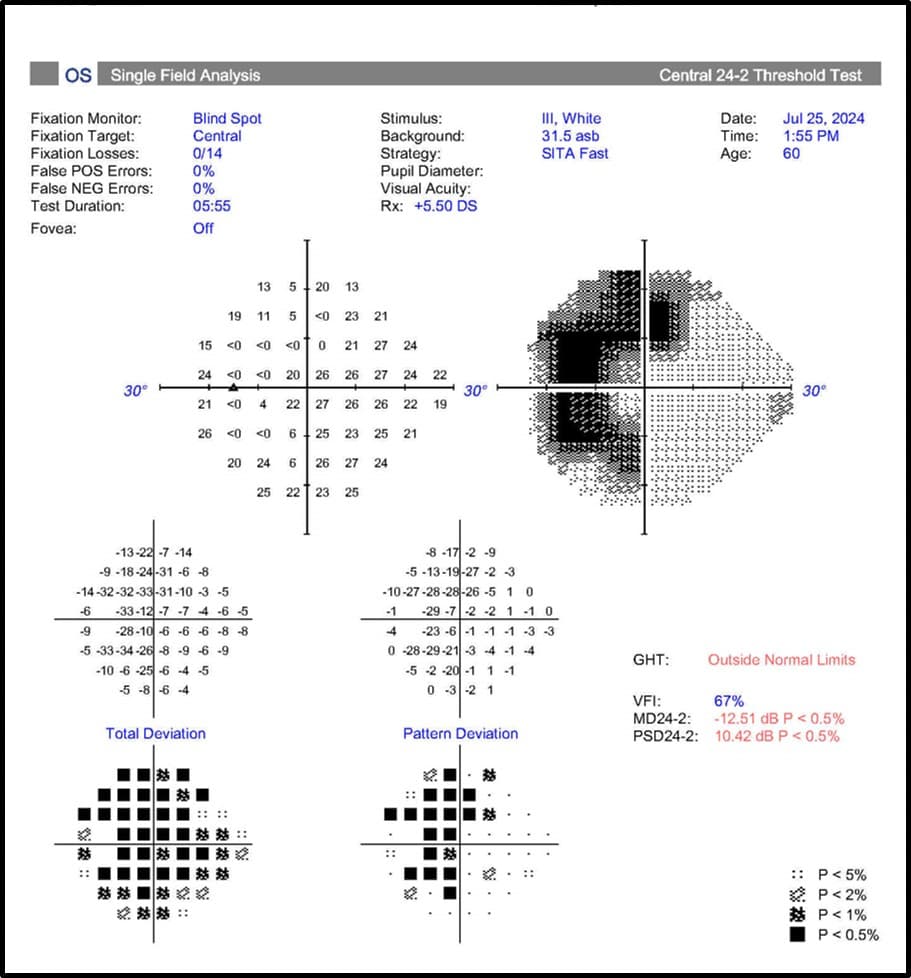
Fig 1a. Visual field analysis (central 24-2 threshold test) at presentation showing bitemporal defectFig 1b. Visual field analysis (central 24-2 threshold test) at presentation showing bitemporal defect
Dr Arvind Gupta is a consultant at Health New Zealand Counties Manukau and Auckland, one of the directors at Eye Doctors, Auckland and specialises in cataract surgery with premium IOL, neuro-ophthalmology and medical retina.
Kaitiaki Hauora warns that increasing privatisation of public healthcare, particularly ophthalmology services, risks undermining the training of future specialists and the sustainability of the
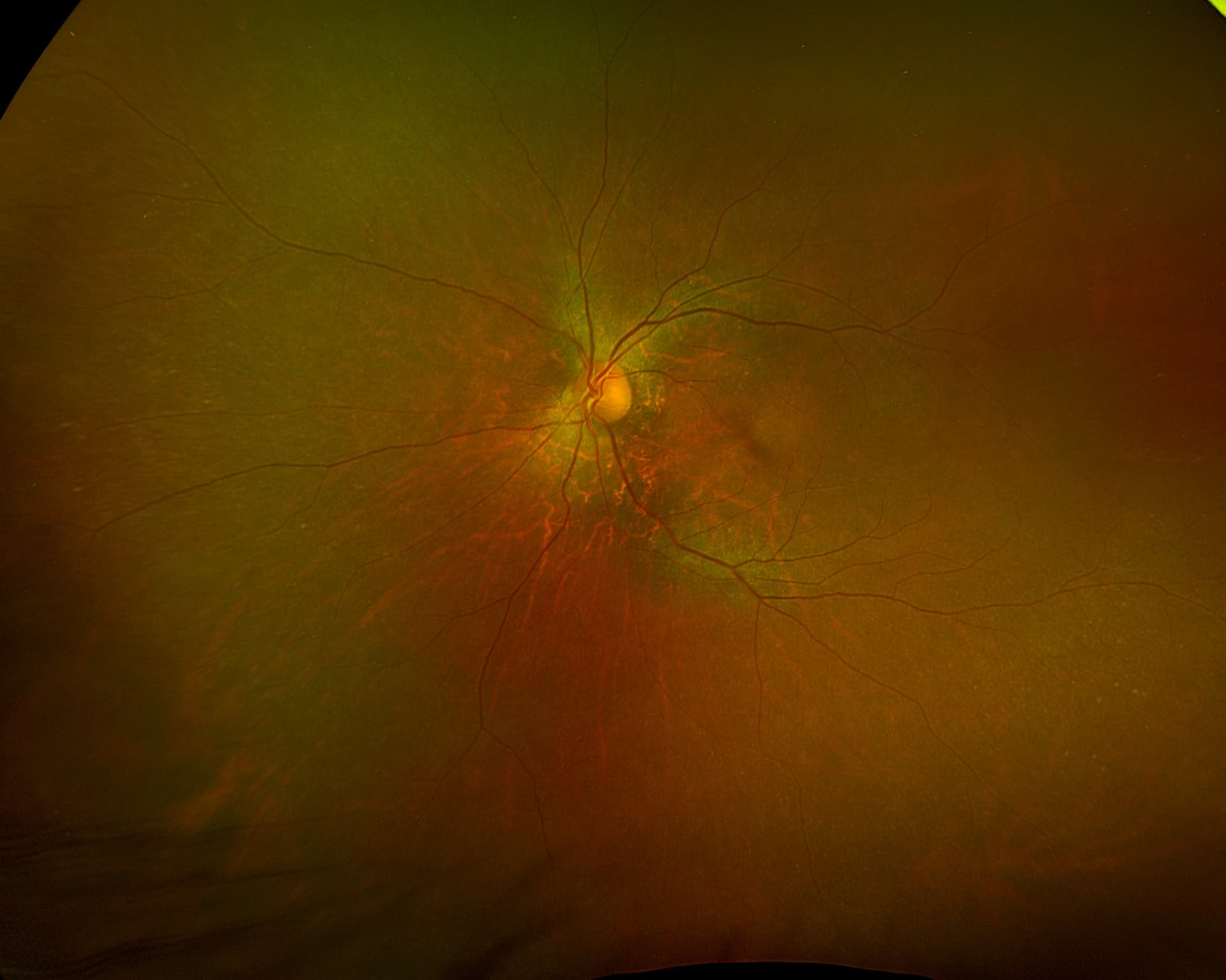
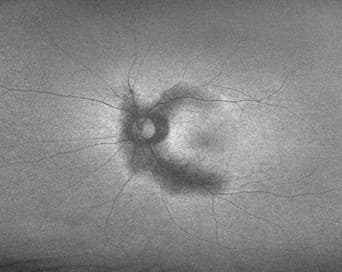
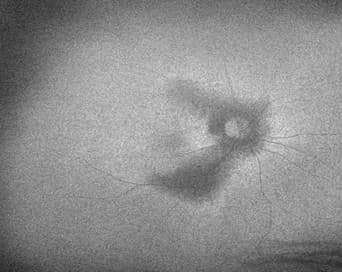
She was promptly seen in the neuro-ophthalmology clinic. The Humphrey Visual Field (HVF) test demonstrated a bitemporal field defect (Fig 1). However, the dilated fundus examination noted the presence of perivascular pigmented changes along the superior and inferior retinal vascular arcades, characteristic of PPRCA (Fig 2). HVF analysis showed changes consistent with a bitemporal defect (Fig 1). An MRI of the brain did not reveal any pituitary tumour.
Fig 2a–d. Ultra-widefield imaging (top two images) showing perivascular pigmentary changes and fundus auto-fluorescence (bottom two images) of the patient at presentation showing hypofluorescence due to RPE atrophy
Discussion
Pigmented paravenous retinochoroidal atrophy is a rare condition characterised by slowly progressive atrophy of the retinal pigmented epithelium (RPE) and the choriocapillaris. These changes are bilateral, often asymmetric and characterised by bone corpuscle pigment accumulation limited to the retinal vascular arcades and the peripapillary region1.
Although the exact mechanism remains unknown, many dysgenetic, degenerative, hereditary and inflammatory conditions have been associated with the disease. PPRCA was initially described in 1937 by Dr Hewitson-Brown as retino-choroiditis radiata in a patient with tuberculosis2. Further inflammatory associations include sarcoidosis, Behçet disease, measles, rubeola, syphilis and tuberculosis3.
As the majority of the patients are asymptomatic – uncommonly, patients may present with blurry vision in cases where the atrophy extends to include the foveal region4 – so initial diagnosis is based on incidental retinal findings during routine eye examinations.
The definitive diagnosis is usually based on clinical examination and is aided by multimodal imaging. Advances in multimodal imaging techniques, such as optical coherence tomography, ultra-widefield imaging and fundus autofluorescence, have significantly improved diagnostic capabilities5. Visual fields exhibit variable functional defects depending on the anatomical location of the pigmentary changes.
PPRCA should be differentiated from retinitis pigmentosa, which is typically a bilateral, symmetric inherited retinal disorder, which typically presents with progressive peripheral vision loss and night blindness.
Currently, there are no effective treatment options for atrophy of the retina, retinal pigmented epithelium and choriocapillaris, all layers that are affected in PPRCA6.
Key takeaways
Retinal assessment through a dilated pupil is essential to pick up unusual retinal pathology.
Our natural instinct links bitemporal field defects with chiasmal lesions; in some cases, such as PPRCA, localised retinal insult is the cause.
Prompt referral is warranted to investigate any systemic inflammatory associations.
References
Antropoli A, Arrigo A, Pili L, Bianco L, Berni A, Saladino A, Bandello F, Battaglia Parodi M. Pigmented paravenous chorioretinal atrophy: Updated scenario. European Journal of Ophthalmology. 2024 Jul;34(4):941-51.
Brown TH. RETINO-CHOROIDITIS RADIATA. Br J Ophthalmol. 1937 Dec;21(12):645-8.
Ghosh B et al. SD-OCT in pigmented paravenous retinochoroidal atrophy. Ophthalmic Surg Lasers Imaging. 2012 May 10; 43(3):e41-3. PMID: 22589361.
R. Romero, A. Castano, M. Moriche, B. Poyales, M. Granados. Pigmented paravenous retinochoroidal atrophy with macular involvement. Arch Soc Esp Oftalmol, 88 (2) (2013), pp. 77-79
Lee EK, Lee SY, Oh BL, et al. Pigmented paravenous chorioretinal atrophy: clinical Spectrum and multimodal imaging characteristics. Am J Ophthalmol 2021; 224: 120–132
The Australian and New Zealand Strabismus Society’s (ANZSS) annual meeting featured distinguished speakers Prof Andrea Molinari and Prof Fiona Rowe, covering str
'Ophthalmic Drug Delivery' is a comprehensive compendium of ocular pharmaceutical research, emphasising industrial and regulatory requirements to translate innovations from
Dublin advanced nurse practitioner Diana Malata explains how Ireland's nurse-led crosslinking (CXL) programme has accelerated care for keratoconus patients,
Kia ora koutou. As convenor of the 76th RANZCO New Zealand Annual Scientific Meeting (ASM), I am delighted to invite you to join us in Queenstown 8–9 May 2026. The meeting will be held at the newly re




.jpg&w=1920&q=75)