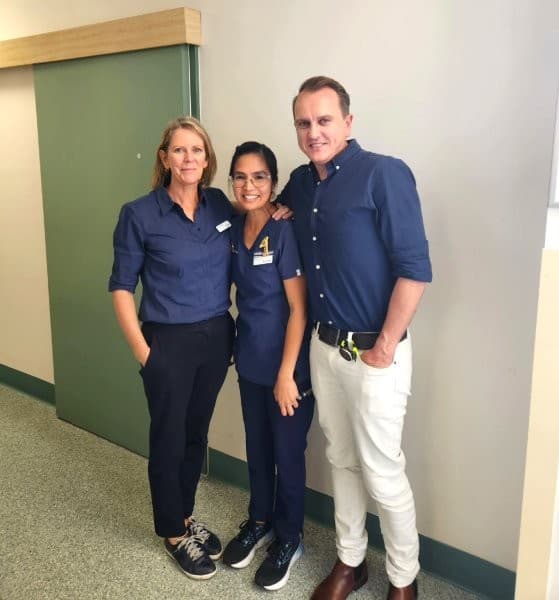
Dublin advanced nurse practitioner Diana Malata, who spearheaded Ireland’s nurse-led crosslinking (CXL) treatment programme, explains how it has accelerated care for patients living with keratoconus and how New Zealand might benefit from following suit.
Over a decade ago, the Royal Victoria Eye and Ear Hospital (RVEEH) in Dublin pioneered a nurse-led (epithelium-off) accelerated CXL service in Ireland. The goal of the collaboration between ophthalmologists and ophthalmic nurses was to improve patient care, reduce wait times and free up ophthalmologists to perform more complex eye procedures.
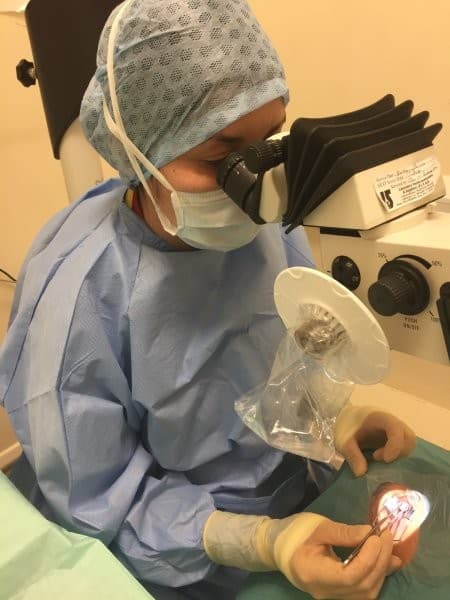
CXL is a minimally invasive, day-stay procedure used to strengthen the cornea by applying riboflavin (vitamin B2) drops and UV light, stimulating collagen cross-links. In epithelium-off (epi-off) CXL, the top layer of the cornea is removed and riboflavin drops are applied to the eye every few minutes for 10–30 minutes.
In RVEEH, we’ve always performed epi-off CXL. The patient will be sore while the epithelium is healing, so they are prescribed painkillers for three days. Studies show epi-off CXL allows better riboflavin penetration and more effective long-term results. Although epi-on is more comfortable for patients and has a lower risk of post-operative complications, epi-off is considered the gold standard to halt keratoconus progression.
In 2008, RVEEH ophthalmologists began using the Dresden CXL protocol, with treatment taking an hour; by 2012, an accelerated CXL protocol had cut the treatment time in half, with just 10 minutes of riboflavin application then four minutes of UV exposure.