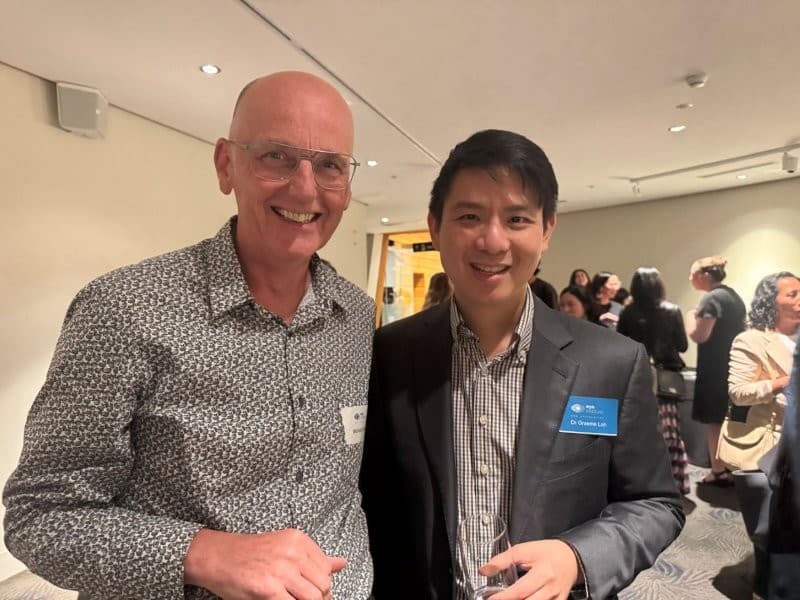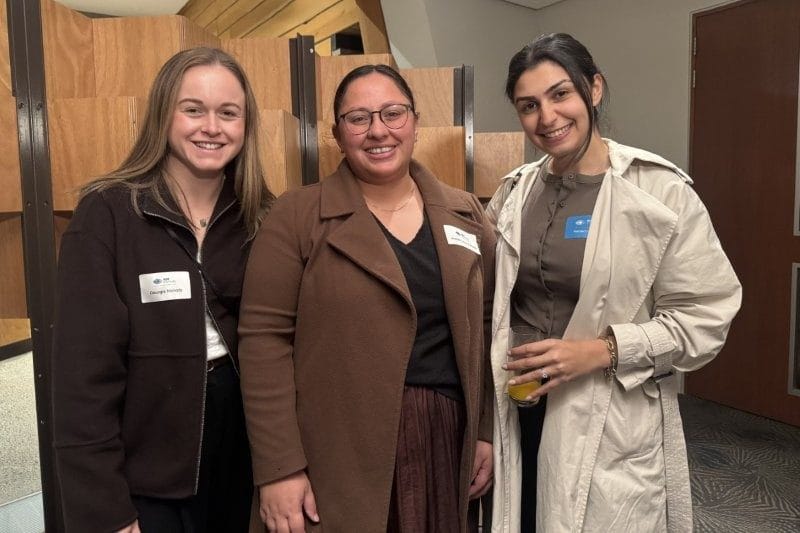
Confession: I have blatantly stolen that heading from this year’s Eye Institute (EI) evening seminar’s MC Dr Peter Hadden (thank you, Peter!). Unlike the film, though, there were no ancient artefacts coming back to life at the Auckland War Memorial Museum on 11 May. Instead, EI offered plentiful talks with lots of useful tips for the attending optometrists.
Understanding and correctly interpreting OCT and fluorescein angiography is key to strengthening optometrists’ ability to provide collaborative care and was somewhat of a theme for the evening. As primary caregivers, optometrists regularly come across intraocular tumours and it’s important to have a simple and systematic approach when dealing with these during examination, said Dr Hadden. While most are benign, he emphasised the importance of distinguishing benign naevi from malignant melanomas such as choroidal melanoma and uveal melanoma. The MOLES scoring system (Mushroom shape, Orange pigment, Large size, Enlarging tumour and Subretinal fluid) is used for triaging in the UK and can be helpful when assessing tumours and flagging high-risk cases for referral to an ocular oncologist.
Dr Sophie Hill dived deeper into imaging with a talk on interpreting macular OCT. Starting with a normal macular anatomy on OCT, she then progressed to recognising scan quality issues and artefacts. Next, using a step-by-step approach and dividing the macular image into sections (inner retina (top), outer retina, choriocapillaris and choroid) she walked through several macular disease cases, locating and describing the pathology and correlating the OCT findings with the clinical findings.
Revealing a new EI service, Dr Hill put the call out to optometrists treating patients living with dry AMD who may be suitable for photobiomodulation (PBM). PBM therapy is thought to act mainly through mitochondrial photoacceptors, particularly cytochrome c oxidase, to improve cell function and reduce inflammation and oxidative stress. With multi-centric clinical research programmes (LightWave I, II and III) supporting PBM for dry AMD, EI is now comfortable it is a clinically safe and effective method, she said.
Little wings