The management of non-exudative (dry) age-related macular degeneration (AMD) has historically been limited to surveillance and lifestyle modification. While the AREDS2 formulation remains the standard of care for reducing the risk of conversion to wet AMD or atrophic AMD, it offers no restorative benefit for compromised photoreceptor function or established retinal pigment epithelium (RPE) atrophy.
Recently, photobiomodulation (PBM) has garnered increasing attention as a potential therapeutic intervention for dry AMD. This non-invasive modality employs specific light wavelengths to stimulate cellular function. While initially viewed with scepticism, the evidence base supporting PBM has matured substantially recently. This shift is underscored by the recent FDA approval of the Valeda system. However, with Valeda’s New Zealand release not anticipated until later this year, the Eye-light system (available locally since July 2025) has provided an immediate avenue for clinical application and patient access.
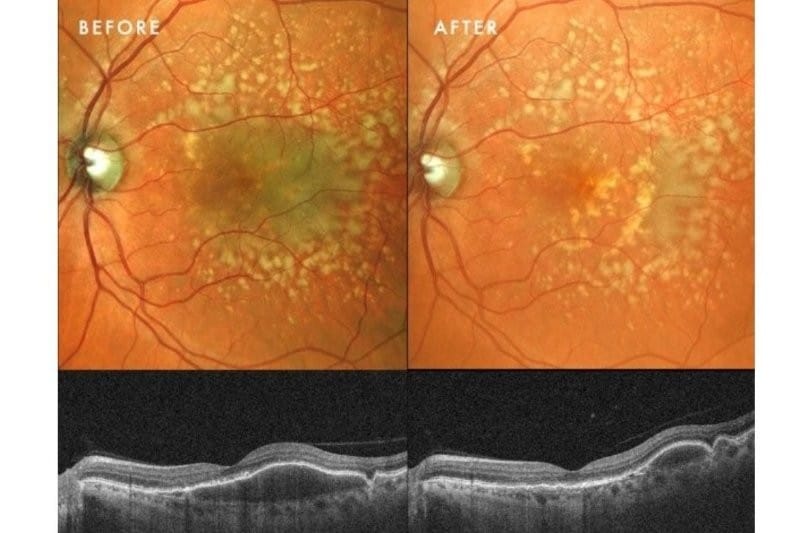
This article briefly reviews the emerging international literature and presents findings from New Zealand’s first retrospective clinical case series using the Eye-light system, aiming to determine if reported outcomes are replicable in the real-world.
The evidence base
PBM targets cytochrome c oxidase to optimise mitochondrial function and reduce oxidative stress. In terms of specifications, the Eye-light system emits yellow (590nm) and red (630nm) light, distinguishing it from the Valeda system, which employs a tri-wavelength protocol (590nm, 660nm and 850nm). However, the total irradiance is similar between the two. Crucially, recent publications indicate that Eye-light achieves similar clinical outcomes to Valeda, while further elucidating the underlying mechanisms of action.