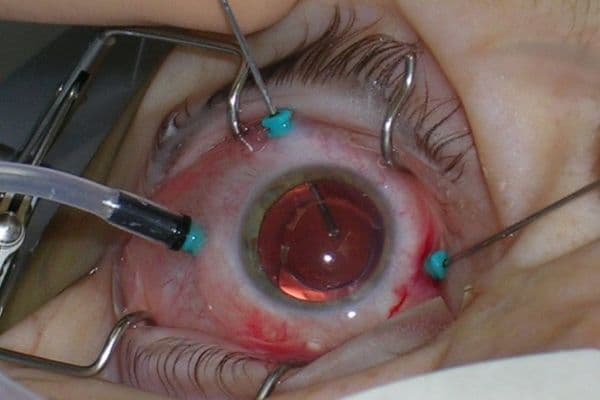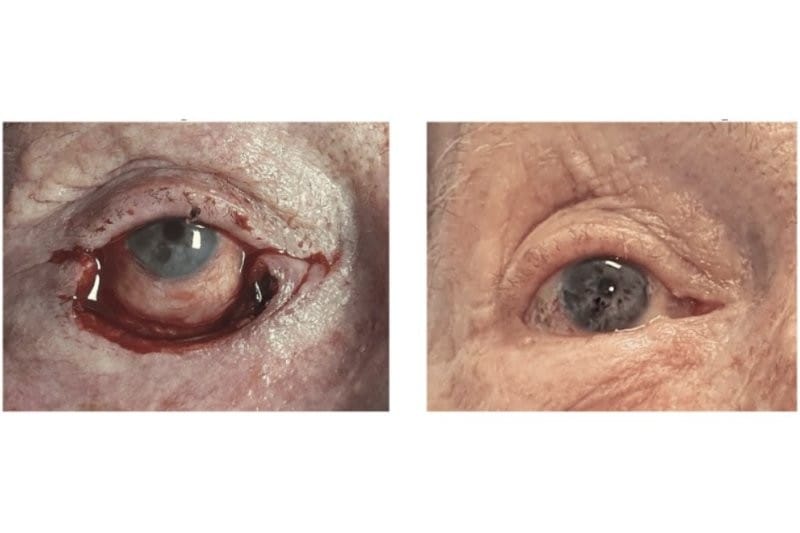
Skin cancer rates in Aotearoa are among the highest in the world, leading to more frequent recurrences and increased surgical interventions. This has significant clinical implications in ophthalmology, particularly in oculoplastics, where the management of eyelid tumours poses both functional and aesthetic challenges.
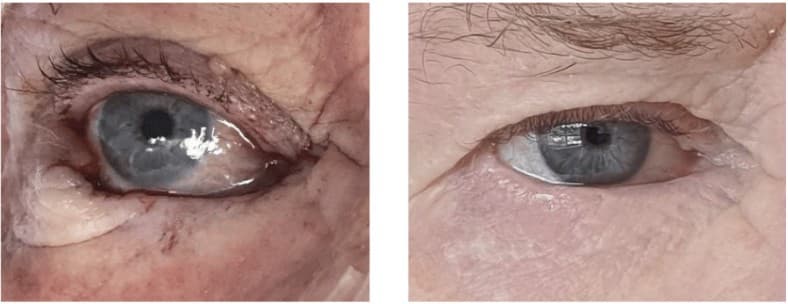
Full-thickness lower eyelid defects following tumour excision present a substantial reconstructive dilemma due to the complex anatomy and its impact on eye health and vision. Traditional reconstructive techniques cover such defects by making use of healthy tissue harvested from the lateral canthus (eg. Tenzel flap), the upper lid (eg. Hughes flap) or other places (eg. the nasal septum or the ear). These options, nonetheless, sacrifice healthy tissue which could be extremely useful in cases of recurrence or new tumours in the same area, creating a challenging iatrogenic morbidity.
Some of these traditional procedures cause severe disruption in patients' lives, requiring a two-step surgery where the eye remains closed for a few weeks between the first and second operation.