After hearing Australian ophthalmologist Dr Tanya Trinh speak about impostor syndrome at the 30th Eye Institute conference, Naomi Meltzer found herself reflecting on confidence, credibility and the quiet persistence of impostor syndrome among ophthalmic professionals. Here she unpacks what the syndrome is, who is most likely to experience it and a few tips to combat it.
There was a sudden spark of recognition when I tuned in to the end of an interview with All Blacks legend Sir John Kirwan and heard him mention his struggle with impostor syndrome (IS). I had never heard the term before but instantly knew what it meant.
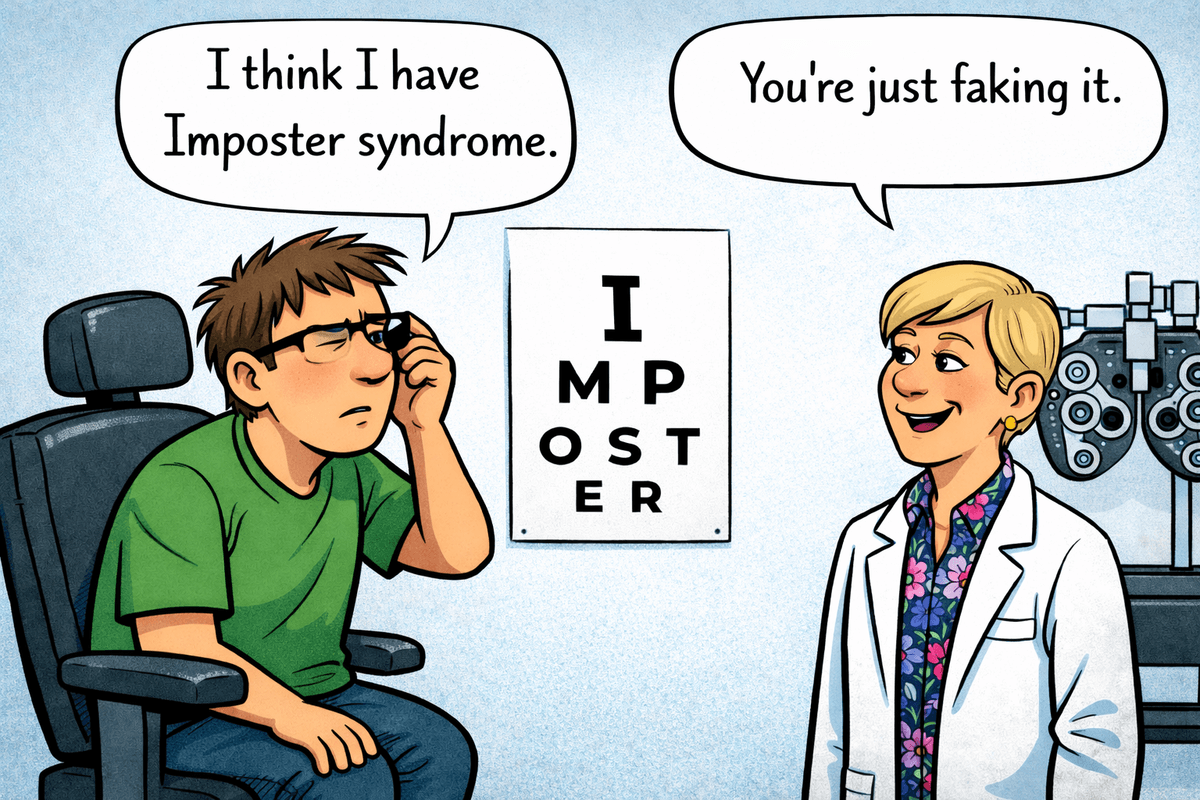
IS is a psychological experience in which a person feels intellectually or professionally fraudulent. Those who experience IS often doubt their skills, talents or accomplishments. They often feel they are not as competent as others and have a persistent internalised fear of being exposed as frauds.
Though not recognised as a psychiatric disorder, IS has become widely discussed outside academic literature, especially in the context of achievement in the workplace. A 2025 study conducted by the University of Idaho concluded there is a strong positive correlation between impostor syndrome, rigid and self-critical perfectionism and low self-esteem. It tends to occur in high-achieving professionals balancing demanding careers and family life. There is a high prevalence among clinicians and academics, with as many as 22–60% of physicians thought to experience the syndrome. Sportspeople are particularly vulnerable, given their often single-minded pursuit of perfection.
The concept was coined in 1978 by US psychologists Pauline Clance and Suzanne Imes1. Their study of high-achieving women showed a pattern of: