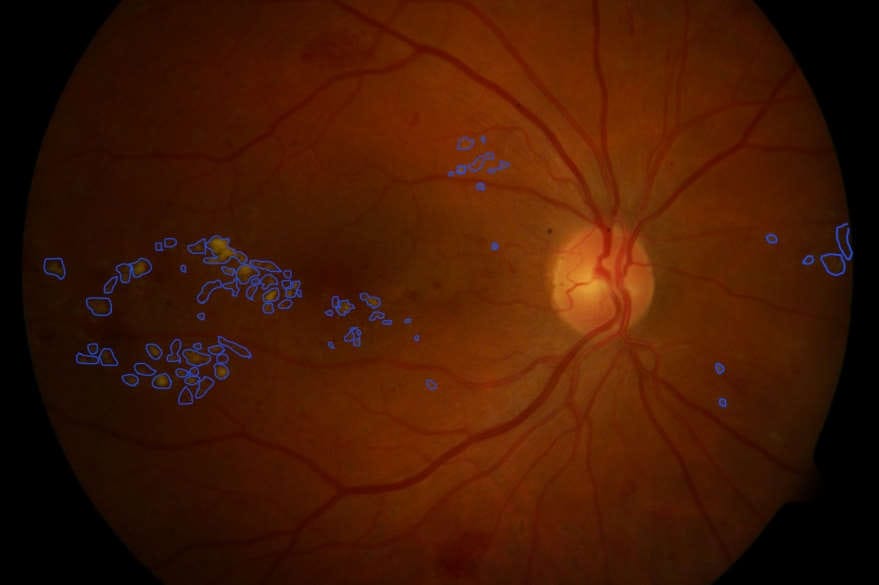
A team of Australian-Brazilian researchers led by RMIT University in Melbourne has developed an image-processing algorithm that it says can automatically detect fluid on the retina, a key sign of diabetic retinopathy, with 98% accuracy.
Lead investigator, RMIT professor Dinesh Kumar, said the method was instantaneous and cost-effective.
Diabetic retinopathy is the leading cause of vision loss in adults and its impact is growing worldwide, with 191 million people set to be affected by 2030. There are no early-stage symptoms and the disease may already be advanced by the time people start losing their sight. Early diagnosis and treatment can make a dramatic difference to how much vision a patient retains.
Fluorescein angiography and optical coherence tomography scans are currently the most accurate clinical methods for diagnosing diabetic retinopathy. An alternative and cheaper method is analysing images of the retina that can be taken with relatively inexpensive equipment called fundus cameras, but the process is usually manual, time-consuming and less reliable.
“We know that only half of those with diabetes have regular eye exams and one-third have never been checked,” Kumar said. “But the gold standard methods of diagnosing diabetic retinopathy are invasive or expensive, and often unavailable in remote or developing parts of the world.