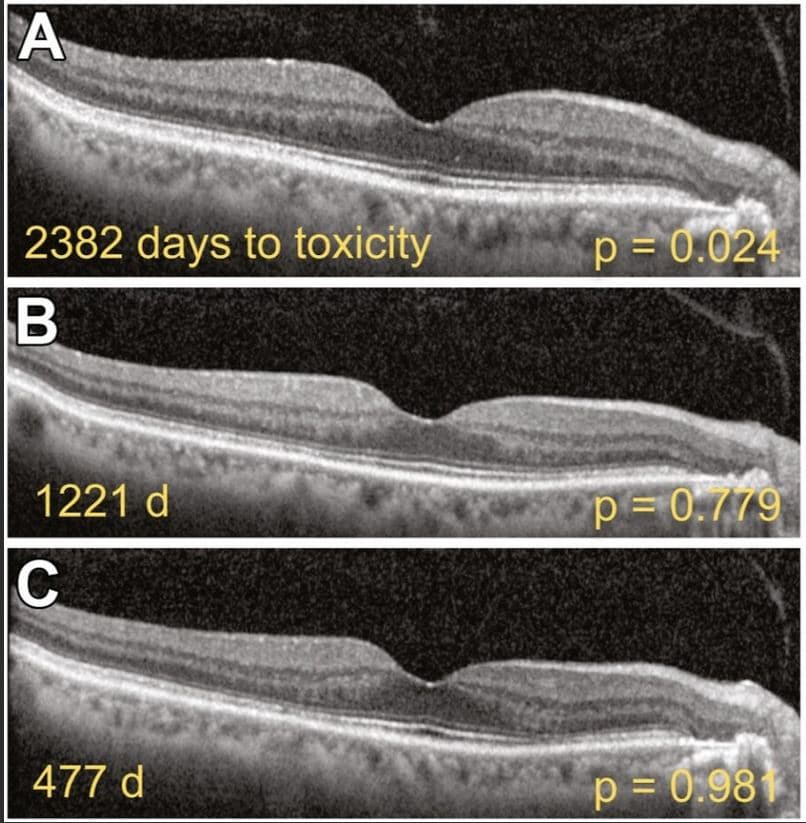
A new artificial intelligence (AI) deep-learning algorithm could transform screening for patients taking hydroxychloroquine by detecting retinal toxicity years before symptoms appear, according to research published in Ophthalmology Retina.
Hydroxychloroquine, prescribed for autoimmune conditions such as rheumatoid arthritis and lupus, can cause irreversible retinal damage in up to 7.5% of long-term users. Current screening guidelines in the UK recommend annual checks with optical coherence tomography (OCT) after five years of therapy. By that stage, however, substantial vision loss may already have occurred, said the authors.
Development of the new tool, HCQuery, was led by Moorfields Eye Hospital NHS Foundation Trust and the University College London Institute of Ophthalmology using data from Moorfields and other eye centres in the UK and US. Trained on more than 8,000 OCT scans from 409 patients, HCQuery detected retinopathy with 100% sensitivity, identifying affected patients an average of 2.5 years before clinical diagnosis, and achieved 91% specificity for ruling out unaffected individuals, researchers said.