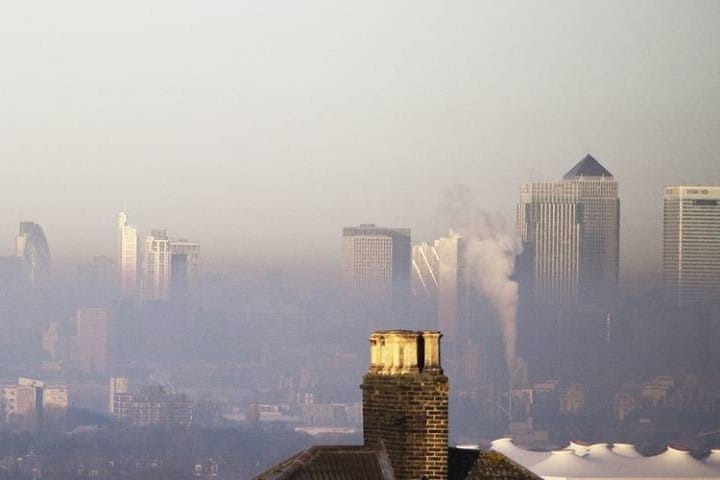
A UK study discovered people in neighbourhoods with higher amounts of fine particulate matter pollution are at least 6% more likely to have glaucoma than those in the least-polluted areas.
The findings, published in Investigative Ophthalmology & Visual Science, present yet another reason for why air pollution should be addressed as a public health priority, said lead author Professor Paul Foster, University College of London (UCL) Institute of Ophthalmology and Moorfields Eye Hospital.
“Most risk factors for glaucoma are out of our control, such as older age or genetics. It’s promising that we may have now identified a second risk factor for glaucoma, after eye pressure, that can be modified by lifestyle, treatment or policy changes,” Prof Foster said.
The findings were based on 111,370 participants of the UK Biobank study cohort, who underwent eye tests from 2006 to 2010. The participants were asked whether they had glaucoma, had their intraocular pressure measured, and spectral-domain optical coherence tomography imaging was performed to measure the thickness of their macula.
The cohort data was then linked to air pollution measures for the participants home addresses, focusing on fine particulate matter (equal or less than 2.5 micrometres in diameter).