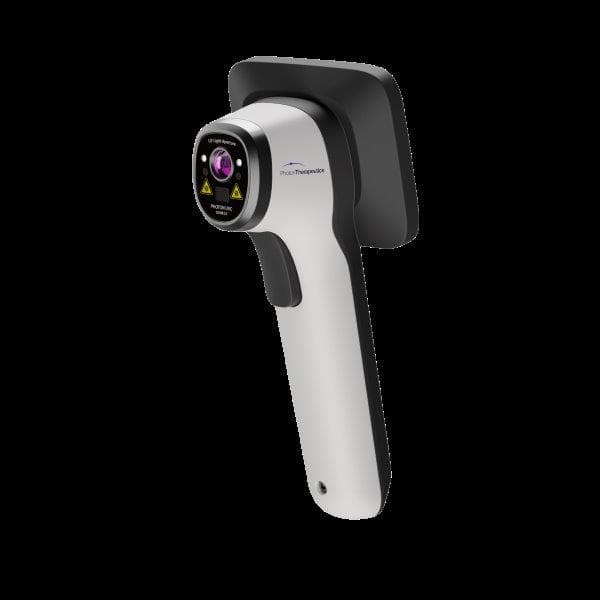
Pre-clinical safety and efficacy trials have been funded by Dr Dean and Prof Shah’s UK-based company Photon Therapeutics and so far the data is all good, said Dr Dean. “The design work is all complete, it has a touchscreen and can be used like a portable slit lamp to view the ocular surface, with switchable white or blue illumination for assessing fluorescein staining, before pulling the trigger and illuminating the target infection with UVC.” It is now forging through the regulatory pathway for human use in parallel to the current vet market final trials and launch, he said.
As well as proving beyond any doubt that it is safe to shine UVC on to living tissue and that there is an adequate safety window between killing pathogenic microorganisms and harming host cells, the research needed to show how well it worked on many different organisms, said Dr Dean. “The theory is it has the same effect on all microorganisms and so far the tests have shown that to be correct, with no microbial resistance to UVC light and no harm to host cells at the doses used.”
The vet market is a good place to test the device does what it’s supposed to do outside the lab, he said, acknowledging that antibiotics work quite well in most keratitis cases, so a large number of trial subjects will be needed to demonstrate the Photon UVC’s effect beyond antibiotics. “I don’t think we can replace antibiotics at this stage, but maybe one day. That would be great in developing countries where antibiotics are scarce and in countries where antibiotic overuse has increased microbial resistance. Certainly the theory is that early intervention with UVC light should give empiric reduction in all microbial organisms and this includes bacteria, viruses, fungi and Acanthamoeba, so it’s likely to be of greatest benefit in those infections where antibiotics have been less effective.”