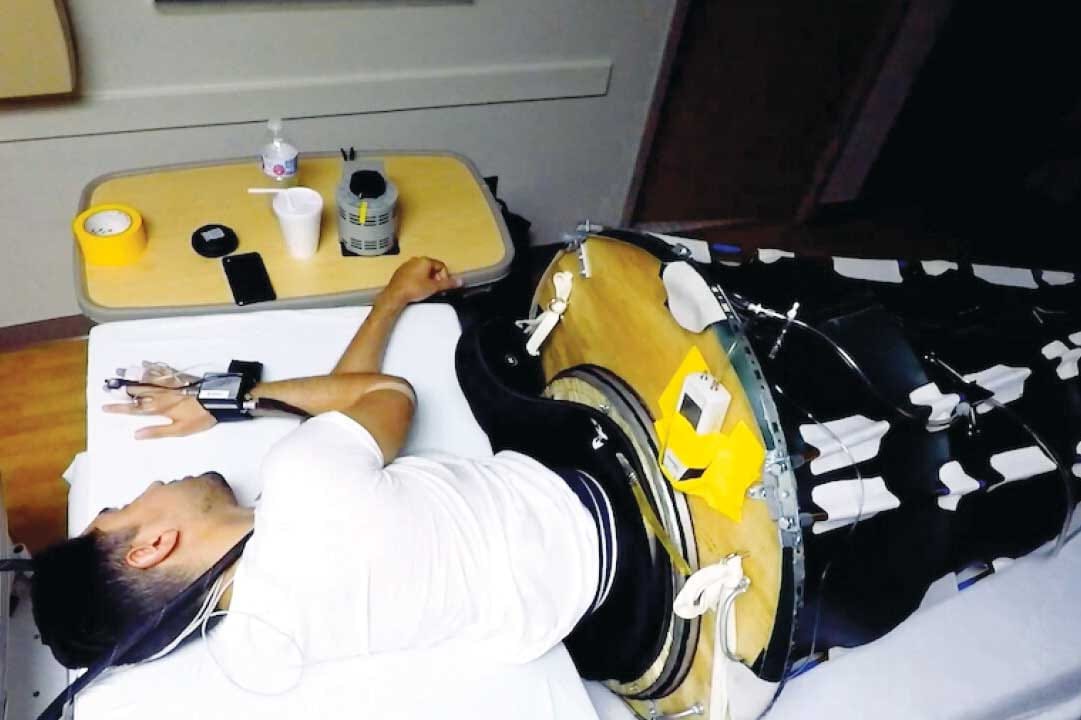
A ‘sleeping bag’ to help astronauts combat space-associated neuro-ocular syndrome (SANS) has been shown to reduce choroid engorgement in simulated microgravity.
A team led by Professor Christopher Hearon, Human Performance Laboratory coordinator, Texas A&M University, US, studied 10 individuals who slept supine with their lower body in a chamber that reduced air pressure around their legs, suctioning fluids into the lower body. Researchers found that during three days of bed rest, this restored subjects’ normal hydrostatic gradients as they slept, attenuating the choroid engorgement that typically results in ocular remodelling and SANS among astronauts during long-duration space missions.The absence of diurnal reductions in intracranial pressure in microgravity is thought to create a low but persistent pressure gradient at the posterior aspect of the eye that leads to SANS, researchers noted.