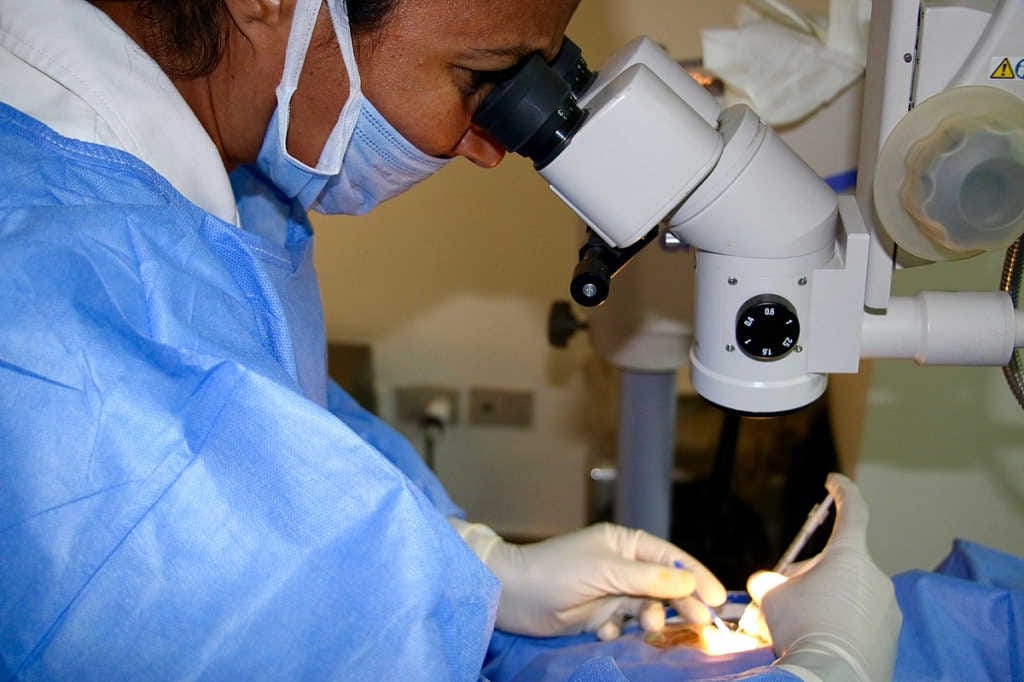
The demand for anti-VEGF injections to stem vision loss from age-related macular degeneration (AMD) and diabetic retinopathy is continuing to rise by about 15% a year, adding to the strain on district health boards’ (DHBs’) eye care budgets, already burdened by backlogs for eye care such as cataract surgery, caused by the Covid-19 pandemic.
Dr Derek Sherwood, head of the ophthalmology department at Nelson Marlborough DHB (NMDHB), said while it was difficult to obtain accurate figures from various DHBs due to different measuring techniques, NMDHB’s figures reflect a steady increase in the need for intravitreal injections. “The increase over five years suggests an annual increase of about 15%, which I believe is the increase being seen in other DHBs.”
Dr Sarah Welch, who now heads up the government advisory body, the National Ophthalmology Expert Advisory Group, and is the clinical director of the Auckland DHB’s (ADHB’s) ophthalmology service, said ADHB had experienced a “tremendous” increase in demand over the past 10 years, with ongoing 15% growth continuing to be the norm. “This year, expected growth has been exacerbated by the reduction in our ability to see people over lockdown, though in ADHB we continued to give injections throughout the lockdown period… We are currently making recovery plans allowing for both catch-up and growth.”
To manage increasing demand, most departments have shifted some of the primarily Avastin-injection workload to ancillary staff and non-ophthalmologists, said Dr Welch. “In ADHB we have trained our nurses to give the intravitreal injections and they now administer over 90% of the injections. We also use some junior staff to do regular injections and a trainee GP who has an interest in ophthalmology.”