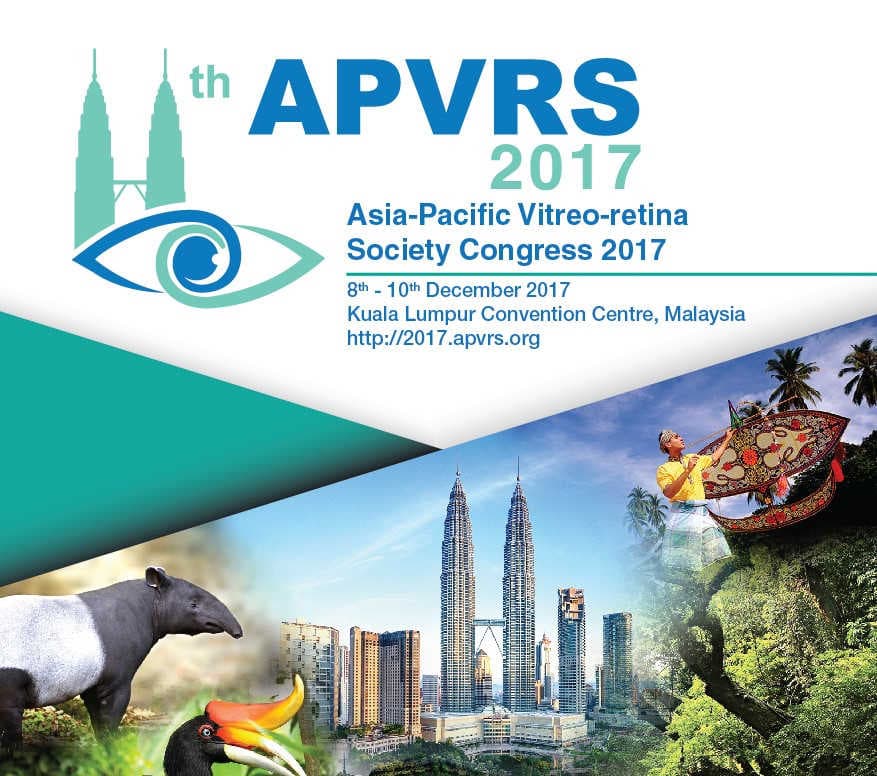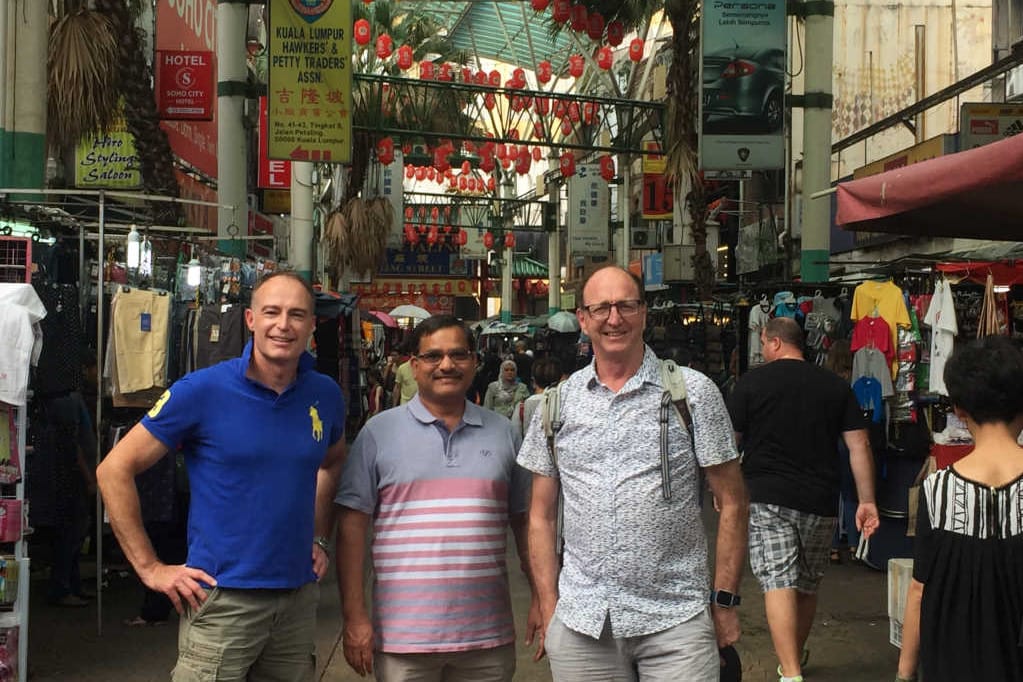
The 11th Asia-Pacific Vitreo-retina Society (APVRS) Congress was held in December in Kuala Lumpur, hosted by the Malaysian Society of Ophthalmology. Enthusiastic hosts, beautiful Asian food, the latest technology from sponsoring companies and a scientific programme to interest all, greeted some 2000 delegates.
The Congress was held in the Malaysian National Convention Centre, just opposite the Petronas Twin Towers. James Bond wasn’t in town, but the Tano lecture delivered by Professor Taraprasad Das from India on endophthalmitis following cataract surgery, attracted a large audience. The other named lectures were equally well-supported, delivering and sharing a wealth of information with the region. It is great to go and listen to experts who have clearly identified problems and can offer some solutions based on clinically published evidence, modified by real life experience. Quoting to a patient with diabetic macular oedema that Eylea will get you back to driving standard 18 months faster than a generic anti-VEGF, for example, as demonstrated by Bayer’s Vivid study, may have great relevance for your patient.
I also enjoyed the first-hand experience of the investigators on Bayer’s Clarity Study (the latest update published in The Lancet in May 2017) who reported on how aflibercept (Eylea) was superior to panretinal photocoagulation for proliferative diabetic retinopathy. Maybe my days hunched over a laser are coming to an end! Perhaps I can cancel my scheduled appointments with my chiropractor?
In addition to the named lectures, the Congress programme included a number of masterclass sessions covering such topics as the timing of intervention for eyes that have suffered significant trauma. There was also a masterclass session on the surgical management of diabetic eye disease and assessment of retinopathy of prematurity. This cluster of talks was aimed at the general retinal specialist and those just starting out, to let them know about the latest findings.
There were also sessions for the more technologically-geeky on new applications on different devices, artificial intelligence, robotic developments and software programmes designed to help with mass screening. There were plenty of free papers as well, reporting on all manner of studies from Asia and beyond.