This year’s combined American Society of Cataract and Refractive Surgery (ASCRS) and American Society of Ophthalmic Administrators (ASOA) meeting was held from 13-17 April in the US capital, Washington DC.
We arrived to a city humming with activity, full to the brim with hundreds of thousands of tourists, attracted as much to the capital as to the many cherry blossom trees, planted across the city, in bloom at this lovely time of year. Washington DC is a fabulous city filled with iconic museums, galleries and monuments. The stunning warm weather on the first few days of our visit allowed us to freely explore some of the city’s attractions (though I didn’t catch a glimpse of the capital’s most current attraction, Trump).
We were welcomed by our Airbnb host who, despite our arrival time of around 2.30am, put on a charming and welcoming face for us, showing us into and around her beautiful apartment in the lovely Adams Morgan area. An energising 30-minute walk from the downtown ASCRS conference venue, this is a culturally diverse neighbourhood filled with plenty of great spots to explore, and provided some respite from the throngs that flooded into DC’s centre for the conference, tourism and the national cherry blossom festival.
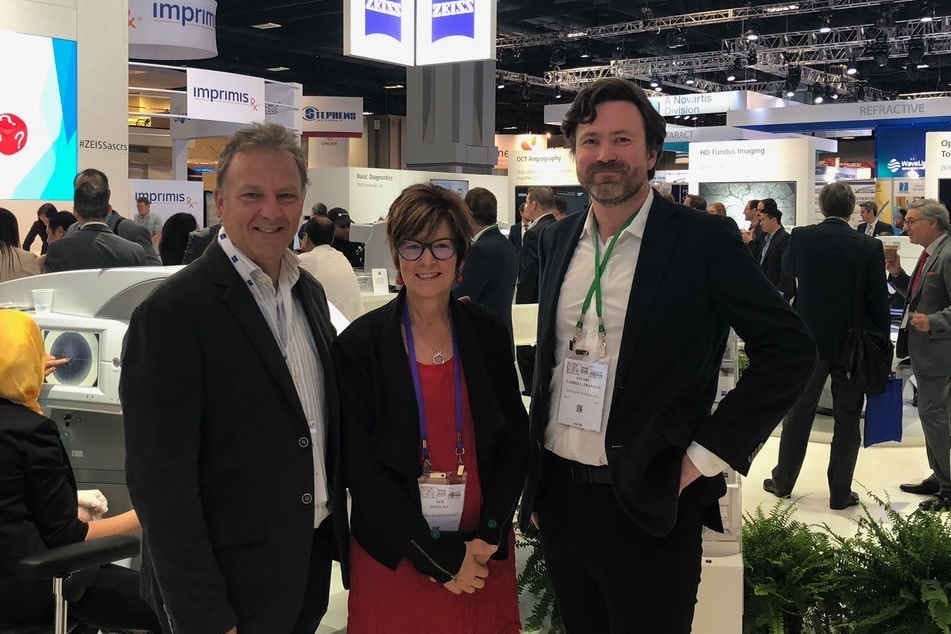
ASCRS was, as one might expect, a huge conference with all of the hallmarks of a big American meeting. The industry hall was massive and teeming with the latest technologies being demonstrated at every opportunity. From all over the world, companies big and small presented a range of devices, medications and other new things, with a large emphasis on minimally invasive glaucoma surgery (MIGS), cataract and refractive technologies. The bigger exhibitors proudly showed off their tech with presentations from well-known “celebrity” ophthalmologists.
One of the great difficulties with meetings as large as this, however, is deciding what not to attend, the 151-page programme being as overwhelming as you might expect. There are at least a dozen concurrent symposia at any one time, ranging from instructional courses and scientific paper sessions to clinical case conundrums with expert panels and practice management sessions. Fortunately, it was hard to choose poorly as the quality of sessions I attended were universally superb.