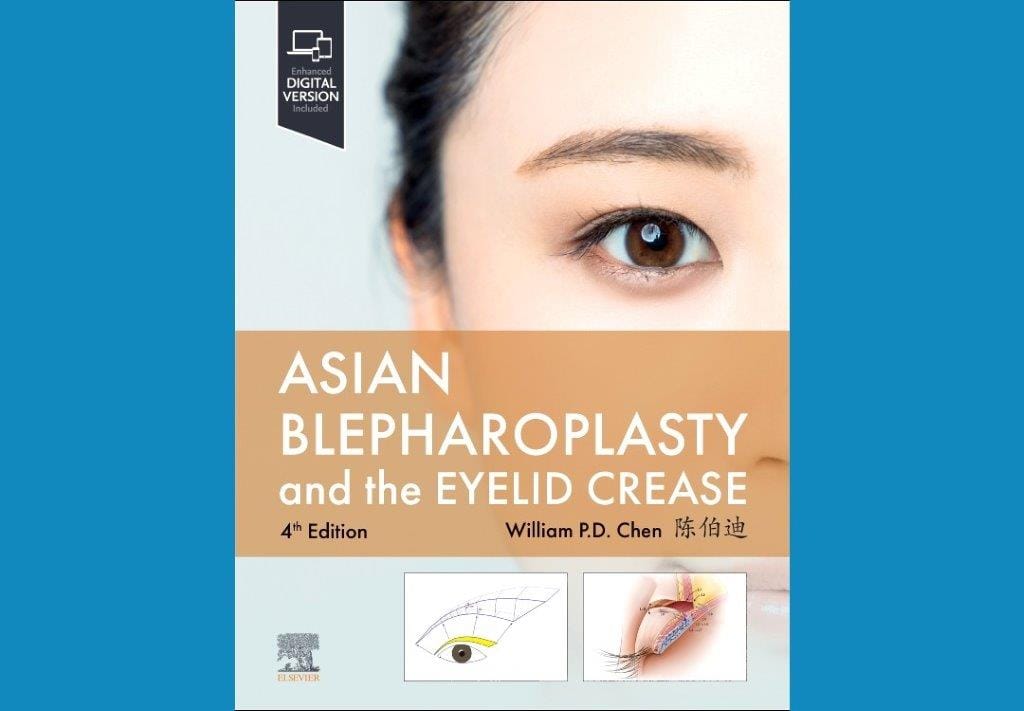
This book’s name is somewhat of a misnomer – not only is it very enlightening on the subject of Asian blepharoplasty, it is also a very thoughtful and well laid out comprehensive text relevant to all blepharoplasty surgery. The author, William Chen, a clinical professor of ophthalmology at the University of California Los Angeles, is obviously a thinker rather than a follower and this fourth edition is evidence of his unapologetic, evidence-based approach to blepharoplasty surgery, which builds on previous editions spanning more than 20 years.
The book itself covers the indications for blepharoplasty, concentrating on the Asian lid, with countless well-illustrated diagrams. The take-home message I got reading this text was the importance of less is more – aiming to achieve a lid crease reformation procedure that is sympathetic to the individual with minimal disruption of tissue. The best example of this is the only reference to epicanthal fold surgery in a six-page chapter. Prof Chen describes how more can be achieved with the standard approach and slight modification than the flashy, but more invasive (and often more obvious later) flying man and complex medial canthoplasties, which are really aimed at blepharophimosis surgery.
As well as the text’s well-drawn diagrams and many pre- and post-op comparison photographs, the book comes with a code to unlock 68 online videos. Prof Chen explains the reasoning behind various lid crease reformation techniques (both suture-based and incision-based) tailored to the patient’s needs and wants. He goes into depth on the theory behind these techniques and walks the reader through revision surgery, as well as the mechanics of the lid as a dynamic structure.