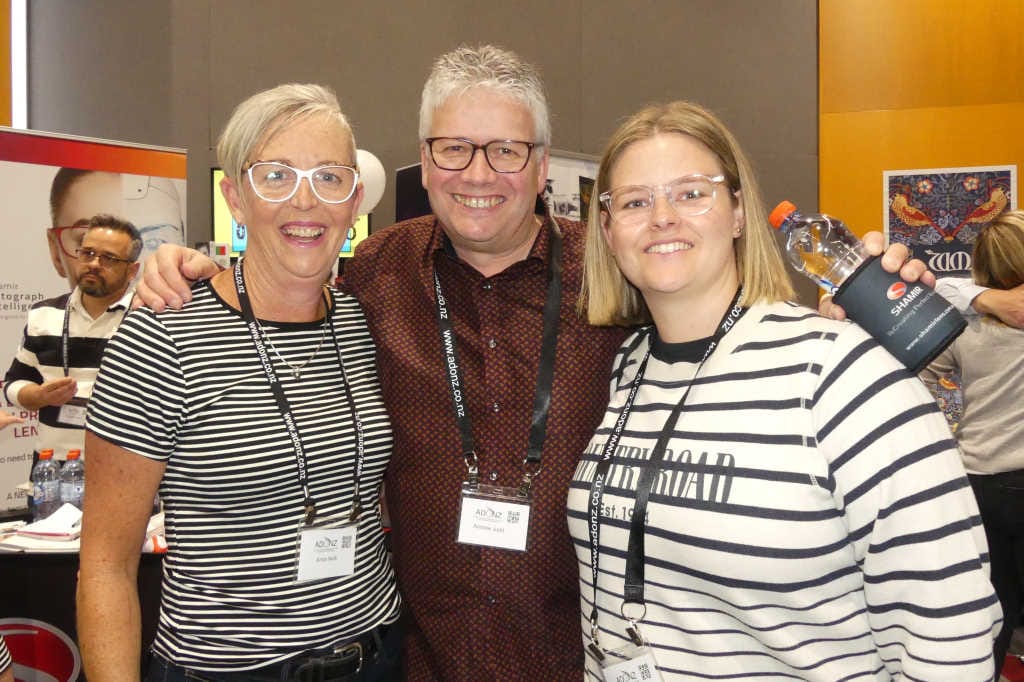
The 2019 Association of Dispensing Opticians New Zealand (ADONZ) annual conference was a superb celebration of the profession, attracting a near record number of attendees. Packed with education, networking and fun, it was most definitely the highlight of the dispensing profession’s year.
Changing world of optics
Change was a recurring theme at the conference. Guest of honour Clive Marchant, president of the Association of British Dispensing Opticians (ABDO), spoke about the importance of embracing change in order to stay relevant and Fiona Anderson, president International Opticians Association (IOA), continued this thread in her lecture The future of the optical industry. Anderson discussed how the patient journey is changing with the technology advancement, tele medicine and DIY optical tools now available. To survive in this rapidly changing world, she encouraged her fellow DOs to leverage new technology and expand services offered by DOs. People buy people, she said, and the internet can’t replace the value of communicating with a highly skilled professional offering specialist service.
Jayesh Chouhan, chair of the Optometrist Dispensing Opticians Board (ODOB), asked DOs what they would like to do if there were no scope boundaries and encouraged everyone to submit in the upcoming consultation on scope of practice. Some of the suggestions were for DOs to fit CLs and do refraction to raise scope of practice to UK standards, support optometrists with therapeutics, carry out minor triaging and have the ability to refer patients to ophthalmologists and other health providers.
Concerns were raised over previous lack of progress regarding scope change and concerning the Therapeutics Bill which will require ministerial sign off before public consultation opens. ODOB registrar Lindsey Pine addressed concerns by saying that as the Government is looking at growth and interdisciplinary practice in the health sector, the time for change is now. For successful submissions, she recommended DOs to start with areas representing an unmet public need and focusing on how DOs can help reduce barriers for the public to access healthcare.