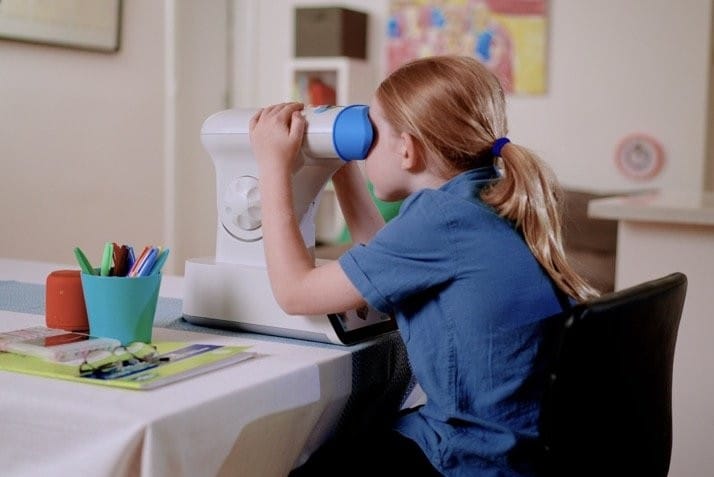
A recent Chinese study investigating the potential retinal effects of repeated low-level red light (RLRL) therapy for myopia control found long-term use may be associated with structural changes in cone photoreceptor density. Eyerising International, the company behind the RLRL Myopia Management Device, is challenging these findings, raising concerns about the study’s methodology and clinical design.
Using adaptive optics scanning laser ophthalmoscopy (AOSLO), the authors reported a reduction in cone density within 0.5mm of the foveal centre in the RLRL-treated group compared to controls, particularly pronounced in the temporal region with abnormal drusen-like lesions detected in some of these cases.
Published in JAMA, authors led by Dr Xinyi Liao, Peking University People’s Hospital, argued their findings support the need for further research to evaluate longer-term safety of RLRL therapy in similar individuals.