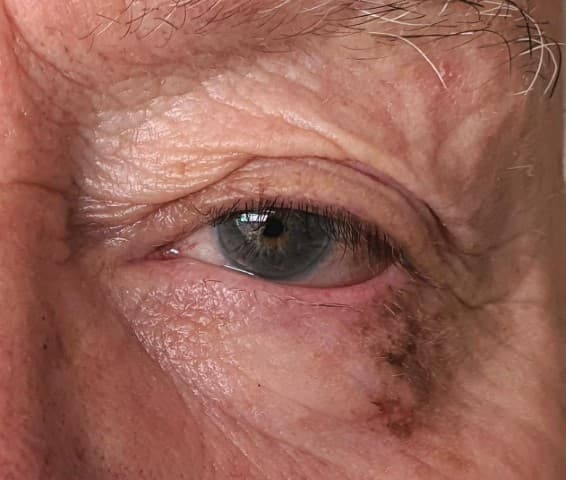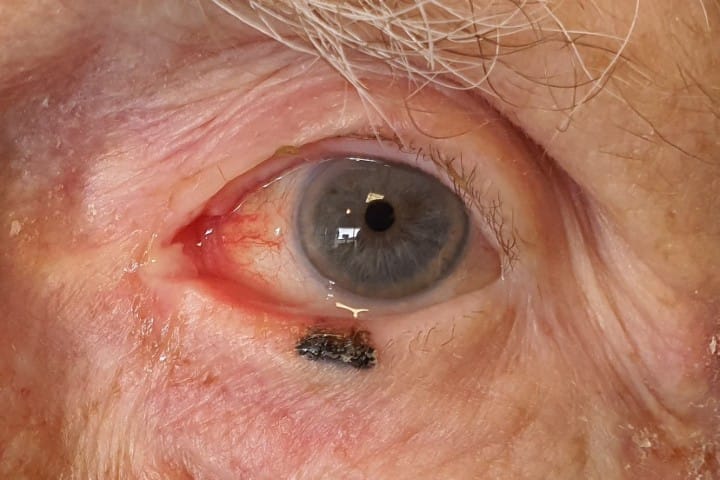
Cutaneous melanoma is a life-threatening malignancy with a rising global incidence. Aotearoa has one of the highest rates of melanoma in the world.
Eyelid melanoma, while rare – accounting for less than 1% of all cutaneous melanomas – carries a better prognosis than on other parts of the body, especially those outside the head and neck region1. The better survival rate is partly due to early detection, facilitated by the high visibility of the eyelids. However, the prognosis worsens significantly in the presence of metastases, a risk facilitated by the rich lymphatic drainage of the head and neck. Additionally, the eyelids are closely related to the eye, posing a serious threat to visual function in the event of invasion, with the possibility of orbital exenteration.
These factors highlight the importance of recognising this entity and maintaining a low threshold for referral when evaluating suspicious eyelid lesions that could represent melanoma.