In conjunction with the University of Auckland’s Ocular Surface team, led by Associate Professor Jennifer Craig, and their international collaborators, dry eye is being investigated as part of the well established Dunedin Study.
Study members (n=1032) are being asked to answer a dry eye questionnaire and then are assessed with the Oculus Keratograph 5M (from Designs for Vision). The keratograph is fundamentally a corneal topographer, but possesses an advanced software module that permits non-invasive analysis of dry eye disease. Among other features, it measures the height of the tear film, the lipid layer, tear break-up time and bulbar redness, and provides non-invasive infra-red imaging of the meibomian glands.
Study members who are being followed throughout their lives are now 45 years old and most of the females are therefore pre-menopausal. We anticipate this study will provide the Southern hemisphere’s, if not the world’s, first dry eye incidence data at this age, providing valuable baseline data for how dry eye develops with increasing age. Plus, because of the multidisciplinary nature of the Dunedin Study, the association of dry eye with a host of other variables such as smoking, cannabis use, systemic inflammation, medication use, depression, occupation and nutritional status can be examined. The impact of dry eye on quality-of-life can and will also be assessed. One of the over-riding research goals of the Dunedin Study is to examine why we all age so differently, so it will be relevant to assess if dry eye is a biomarker of ageing.
Data collection will be complete by mid-2018 and peer-reviewed publications will follow.
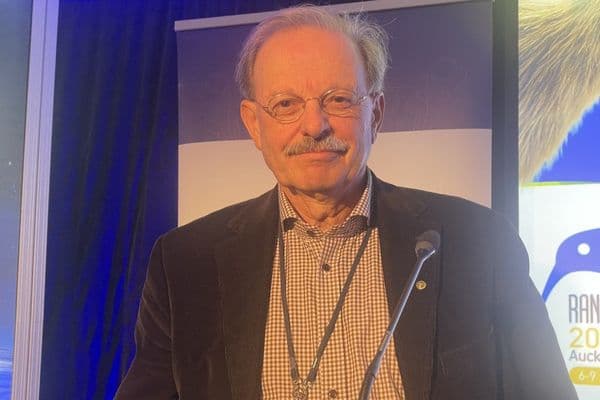
Dr Graham Wilson is a Gisborne-based ophthalmologist and a principal investigator for all eye-related matters on the long-running, internationally ground-breaking Dunedin Study, a detailed research study into human health, development and behaviour, led by the University of Otago, which has been tracking over 1000 people since they were born in 1972 and 1973.