Geographic atrophy (GA) is the late manifestation of non-neovascular age-related macular degeneration (AMD) characterised by progressive loss of retinal pigment epithelium (RPE) and photoreceptors. Until now, it was a slowly progressive untreatable disease that led to vision loss. Emergent trials into the use of complement inhibitors to slow GA progression have shown promising results. Alongside these developments, artificial intelligence (AI) demonstrates efficient and accurate quantitative measurements for disease prognostication and treatment response.
Novel GA treatment
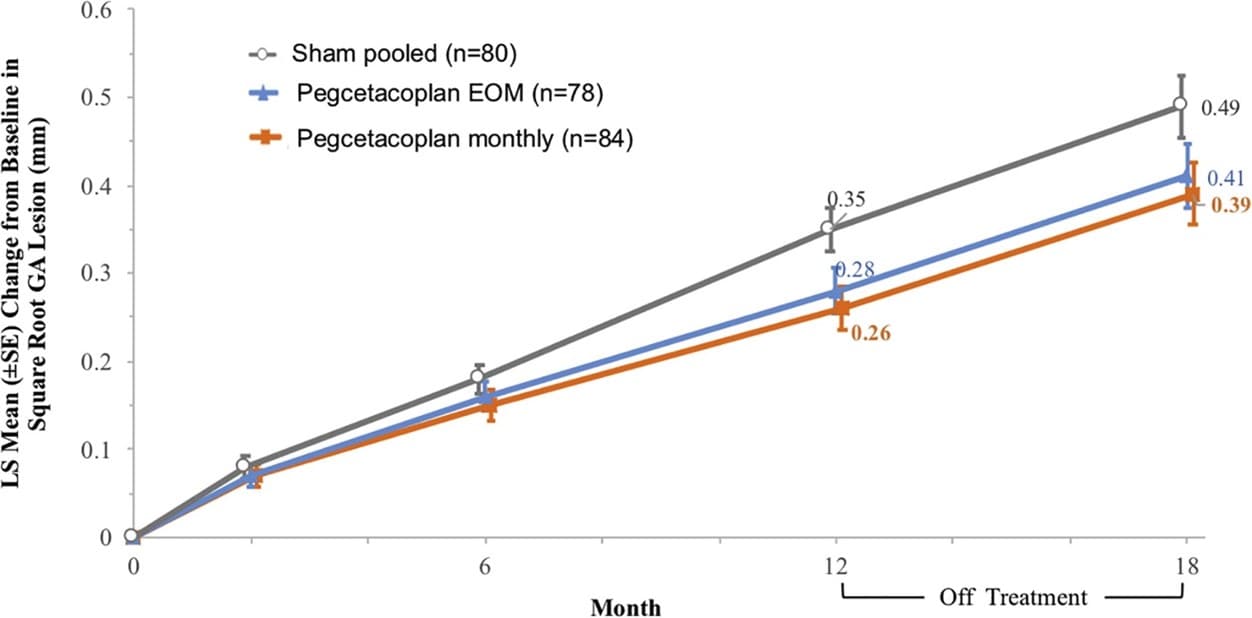
Dysregulation of the complement system is strongly linked to the development and progression of AMD, with evidence coming both from genome-wide association studies and individual case series with rare complement factor H (CFH) gene variants1. Filly is a phase 2 randomised controlled trial evaluating safety and efficacy of pegcetacoplan, a complement C3 inhibitor, for the treatment of GA2. A total of 246 GA patients were randomly assigned to receive 15mg pegcetacoplan intravitreal injection or sham therapy every month or every other month. Eligible patients were at least 50 years of age, had best-corrected visual acuity (BCVA) of 6/95 or better and GA area of 2.5mm2-17.5 mm2. Patients with current or previous neovascular AMD were excluded.