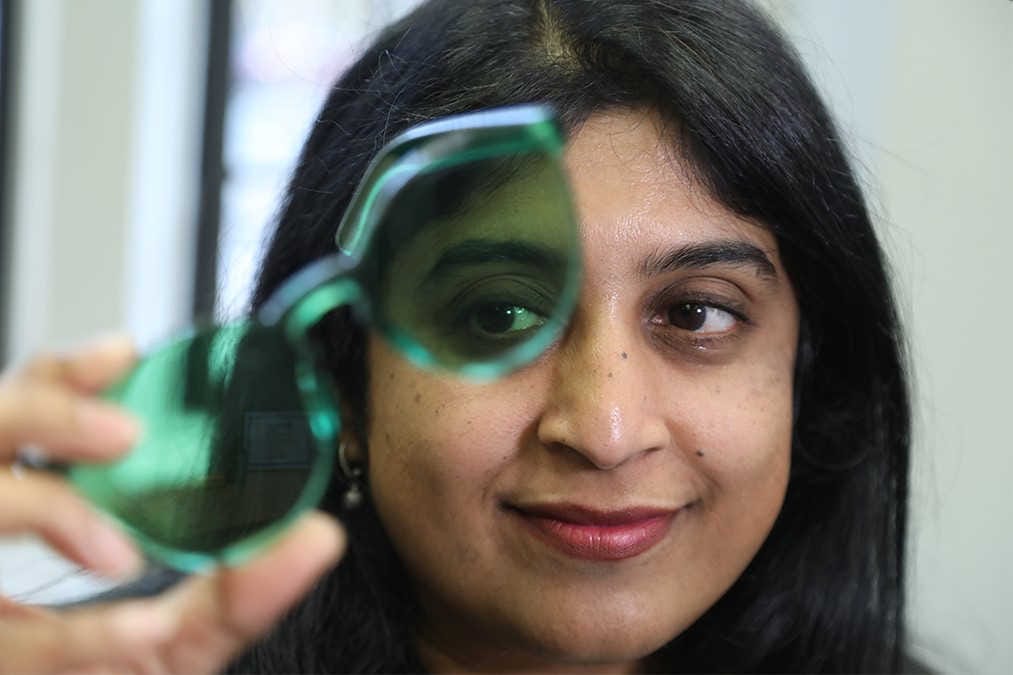
US researchers found the majority of fibromyalgia patients wearing green-light-filtering spectacles needed less pain medication, showed a decline in anxiety scores and a statistically significant difference in responses to the question of fear of pain.
Characterised by widespread musculoskeletal pain, among other symptoms, fibromyalgia affects 2% of US adults, according to the Centers for Disease Control and Prevention. The North Carolina-based Duke University team studied 34 fibromyalgia patients who were randomised to wear various shades of spectacle lens four hours a day for two weeks. “We found that although their pain scores remained the same, those who wore the green eyeglasses showed higher odds of a 10% decline in opioid use, demonstrating that their pain was adequately controlled,” said study lead Dr Padma Gulur, a professor of anaesthesiology and population health sciences at Duke. The advantage to light-mediated pain-relief versus exogenous opioid use is the latter reduces the body’s ability to make its own opioids, creating a greater dependence on drugs, she said.
Dr Gulur explained that although green light ranges from around 495-570nm, the wavelengths helping patients in her study were at either end of that spectrum. The effective wavelength is very specific, said Dr Gulur, with green-lens spectacles sourced from the same company sometimes being discarded by researchers as the filtering accuracy was manufacturing-lot-specific. Consequently, Dr Gulur said consumers buying green-tinted lenses have no assurance of pain relief, as a prescription for a specific wavelength filter is required – which she anticipates will be possible from mid-to-late 2023. The mechanism behind these effects will be the subject of her next project, she said.
In an interview with Radio New Zealand’s Jim Mora, Dr Gulur said her team hypothesise retinal ganglion cells receiving green light trigger an opsin pathway (such as melanopsin) to stimulate pain pathways. Tellingly, said Dr Gulur, although her study had drop-outs due to headaches, none of them was from the green-lens group, “a good number of whom did not want to return their glasses”, she said.
Rodents in the limelight