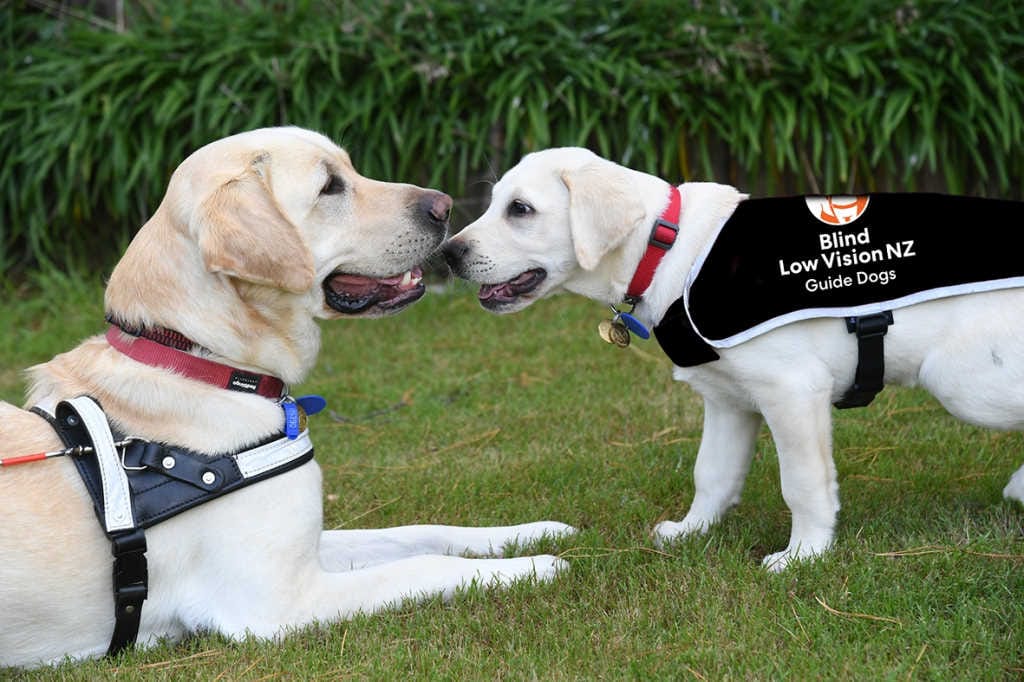
The impact of Covid-19, exacerbated by a spike in kennel cough, has caused a significant drop in the number of guide dogs trained and matched to clients in 2021, reported Blind Low Vision New Zealand (BLVNZ).
Just 15 dogs – compared with about 20 in each of the previous two years, and closer to 35 in non-Covid years – made the grade in 2021, said Peter Hine, BLVNZ’s head of Guide Dog Services. “It certainly became more difficult to fully train guide dogs during the pandemic and we also had a kennel cough outbreak in Auckland, but we have continued to work around such challenges.”
Covid interrupted the normal, steadier stream of breeding dogs and introducing puppies into the training programme, he said. “We’ve had a stop-start, stop-start kind of situation that resulted in quite a few dogs getting a wee bit older and making them a little bit harder to train.”
The aspiration is to return to qualifying around 35 and lift that to 40 guide dogs a calendar year. The key issue is attracting and training enough puppy raisers to sustain a higher number of trained puppies entering the programme, said Hine. Another constraint is the current shortage of trained Guide Dog Mobility Instructors. “New Zealand is currently experiencing a significant shortage of qualified trainers. We were hoping to bring more in from overseas, but with the border restrictions in place this hasn’t been possible.”
Instead, BLVNZ has been training cadets, but the organisation can only manage a limited number at a time, said Hine, which is a concern as some clients have been waiting a while for a dog, the average wait being 15-24 months. Further exacerbating the issue, BLVNZ’s guide dog population is ageing, with some needing retiring and replacing. “Some clients require poodle guide dogs due to allergies, but of the last poodle litter, none of the puppies qualified. It’s an issue we are trying to deal with, partly by trying new breeds, but at the moment it adds to the wait time,” said Hine.