Duke Eye Centre researchers said they may have solved a decades-old mystery in ophthalmology, paving the way for a potential treatment of Best vitelliform macular dystrophy, or Best disease.
Patients with Best disease often continue to see clearly despite a large, egg-yolk-like deposit forming in the macula. The buildup pushes the light-sensing photoreceptors away from the support cells that keep them alive, a separation that, in theory, should severely damage eyesight. However, patients retain near-normal vision for years, even decades, said the Duke researchers.
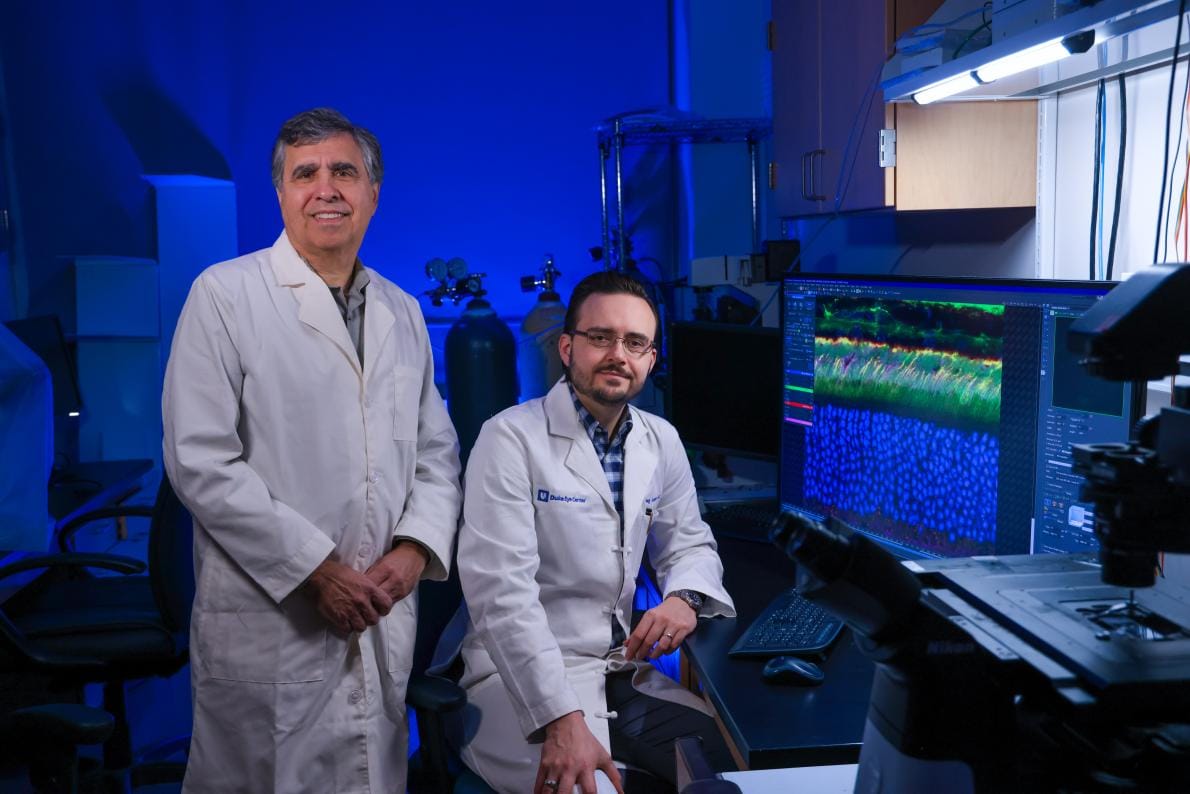
“This has been a persistent conundrum in ophthalmology,” said Professor Vadim Arshavsky, who studies vitreoretinal diseases at Duke Eye Centre. “Using electron microscopy and three-dimensional electron tomography, we were able to uncover how this is possible.”